A network portal of Wine Idea. Discover the world of Wine idea

DIESEL FARM | “BELLISSIMI 1902”: THE CELEBRATORY BOTTLE TOASTING VICENZA’S RETURN AND REBIRTH IN SERIE B

Diesel Farm dedicates a special label to the fans, the city, and the region, transforming the promotion to Serie B into a symbol of passion, shared history, and valorization of the Vicenza hills.

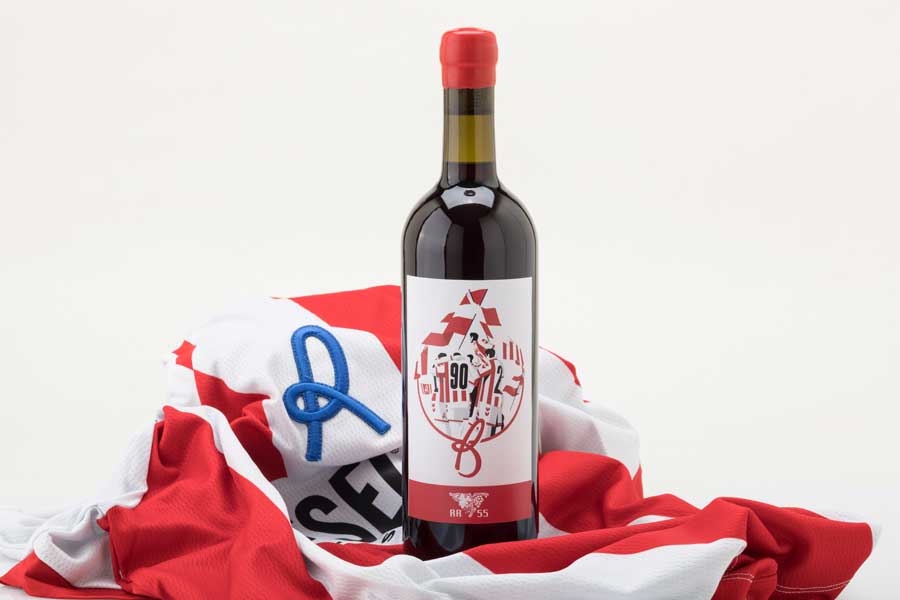
eggs bottle from Renzo Rosso’s Diesel Farm winery, “Bellissimi 1902”, which celebrates Vicenza’s rebirth in Serie B.

To mark Vicenza Calcio’s return to Serie B, “Bellissimi 1902” is born, the official commemorative bottle produced by Diesel Farm and dedicated to an achievement that goes beyond the sporting result: a success that becomes a collective memory and an emotional legacy for an entire region. A promotion achieved with six matchdays to spare, capable of igniting the city’s enthusiasm and writing a new and indelible page in the red and white’s history.

The path that led to this result began with a crucial moment in the club’s recent history: the entry of the OTB Group—the international conglomerate that includes Diesel, Maison Margiela, Viktor&Rolf, Marni, Paula Cademartori, Staff International, and Brave Kid—led by Renzo Rosso. A relaunch project built on continuity, vision, and a focus on its roots, leading to today’s milestone.

“Bellissimi 1902” isn’t just a wine, but the story of a season that united an entire community. It comes to life among the rows of vineyards in the Vicenza hills, where winemaking tradition and local identity intertwine. Like the vines that work silently deep in the winter months, preparing for the new season, Vicenza has built its promotion with determination and perseverance, game after game, until turning a dream into reality.

The blend—Merlot and Cabernet—thus becomes a symbolic expression of this journey: the Merlot, soft and enveloping, recalls the warmth of the fans and the chants that resonate at the Menti Stadium; the Cabernet, structured and decisive, expresses the team’s solidity and unity. The result is a wine that embodies emotion, sacrifice, and rebirth, capable of filling squares and hearts and uniting generations of fans under the same colors.

What makes this limited edition unique is the label designed by Osvaldo Casanova, which reinterprets the promotion’s iconic image in a contemporary key. A tribute both to the club’s founding year, 1902, and to its visual identity: an iconic element, designed to become a precious keepsake for fans and enthusiasts.

Produced in a limited edition of only 2,000 numbered bottles , the “Bellissimi 1902” commemorative bottle can be purchased exclusively on the official Diesel Farm online shop: https://shop.dieselffarm.com/products/bottiglia-celebrativa-bellissimi

Once you’ve completed your online purchase, you can choose to pick up your order at Diesel Farm or at the official Vicenza Calcio stores. Alternatively, home delivery is available with a shipping fee.

A day, March 16, 2026, destined to go down in history, which saw the triumph not only of the team and its entourage, but all those connected to this club, uniting Vicenza like never before and leaving a mark on the collective memory, also thanks to this commemorative bottle.

More than a toast, “Bellissimi 1902” is the synthesis of a sporting and human story: a glass filled with the scent of flags in the wind, chants, embraces, and identity. Because the truest victories don’t end at the final whistle: they are celebrated, cherished, and live on through time.

Historic families at Vinitaly 2026 with the masterclass “AMARONE: TIME, THE ROOM, THE CHOICE”

The masterclass “Amarone: Time, the Dining Room, the Choice,” organized by Famiglie Storiche for Vinitaly 2026 and led by Roberto Anesi, Best Sommelier of Italy 2017.

With this initiative, Famiglie Storiche renews its commitment to promoting Amarone della Valpolicella, promoting a wine culture that combines territorial heritage and a contemporary vision, in the name of quality and authenticity.

Time as a key to understanding, the dining room as a place of interpretation, and choice as a conscious gesture: these are the cornerstones around which the masterclass organized by Famiglie Storiche for Vinitaly 2026 was developed, entitled “Amarone: time, the dining room, the choice – Stylistic evolution and gastronomic versatility of Amarone through the comparison of vintages, balance, precision, and dialogue with the table”.

The event, held on Tuesday 14 April, saw the qualified participation of Ho.Re.Ca. operators, sommeliers and trade press , confirming the association’s central role in promoting a contemporary interpretation of Amarone della Valpolicella.

Amarone is not a wine frozen in time, but a language that evolves. Today, the challenge is no longer explaining what it is, but how to present it in a contemporary way: in its versatility, stylistic precision, and its natural vocation at the table. Time, service, and choice become decisive levers to make it more accessible and relevant in the restaurant industry. Comparing vintages allows us to convey a solid and recognizable identity, which evolves in the way it is interpreted and presented. The Famiglie Storiche embody this shared vision: preserving the identity of Amarone and, at the same time, guiding its evolution,” says Pierangelo Tommasi, president of the Associazione Famiglie Storiche .

Leading the tasting was Roberto Anesi , Best Sommelier of Italy 2017, who guided participants through an in-depth journey built on a comparison of three vintages—2012, 2016, and 2021—through thirteen interpretations of Amarone della Valpolicella DOCG and Riserva , one from each associated family. “Amarone is often automatically associated with richly structured dishes, but today it’s interesting to break out of these patterns and discover new possibilities. During the masterclass, we explored less conventional pairings, from fatty fish like salmon to hints of Asian cuisine, demonstrating that there is plenty of room for experimentation. The interpretations of the Historic Families, while remaining faithful to a classic style, always manage to surprise with their ability to dialogue with the table. The invitation is to rediscover Amarone from a gastronomic perspective, going beyond the most traditional pairings and opening up to perspectives that until recently would have been unthinkable,” commented Anesi.

During the meeting, sensory analysis was intertwined with reflections on service and pairing, offering those in attendance concrete tools to promote Amarone on the menu and in the dining room. This approach underscores the association’s desire to engage more directly with the restaurant industry, strengthening Amarone’s positioning as a highly contemporary wine.

By comparing vintages and styles, the masterclass reaffirmed how Amarone today is a wine capable of expressing balance, precision, and depth, maintaining its identity intact while opening up to new opportunities for consumption and interpretation.

HISTORICAL FAMILIES
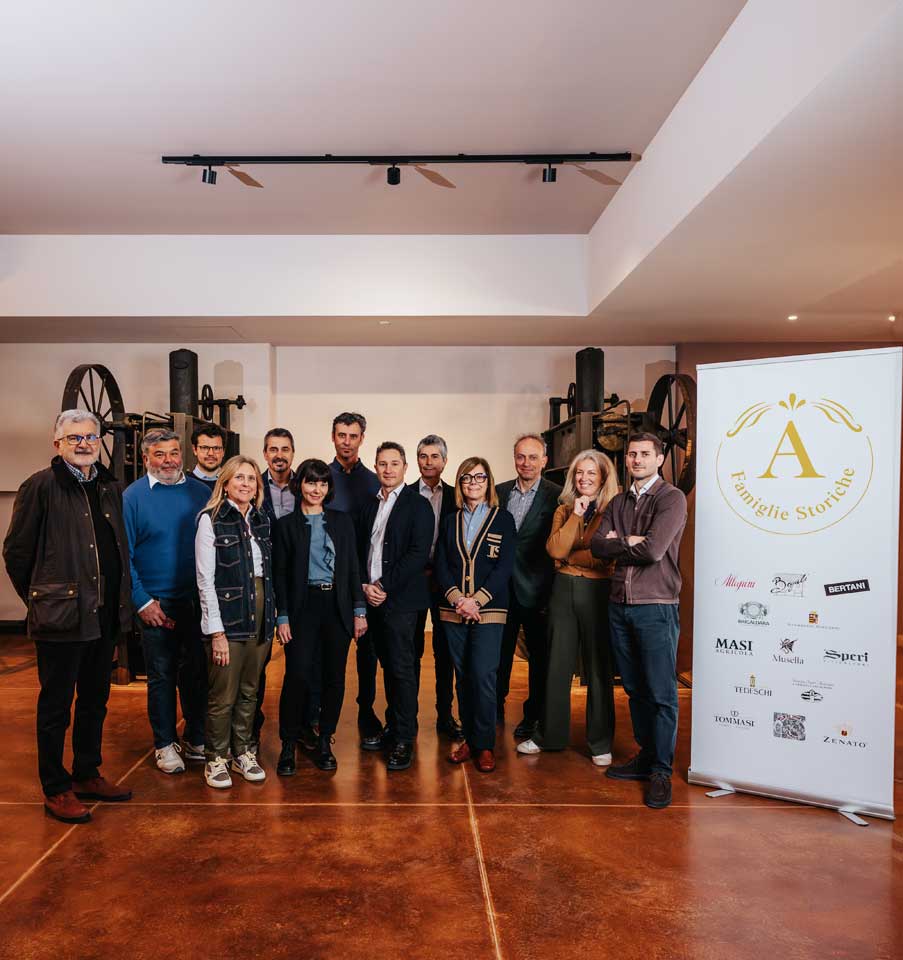
Founded in 2009, the Associazione Famiglie Storiche (Historical Families Association) today brings together thirteen prestigious Valpolicella wineries, each custodian of centuries-old traditions and a production vision focused on quality and the authenticity of the terroir. The member companies are: Allegrini, Begali, Bertani, Brigaldara, Guerrieri Rizzardi, Masi, Musella, Speri, Tedeschi, Tenuta Sant’Antonio, Tommasi, Torre D’Orti, and Zenato.

The companies belonging to Historic Families, who together capitalize on a heritage consolidated by each over time and an unwavering commitment to quality to bear witness to this great wine that is Amarone, are all rooted in the values of history and craftsmanship, expressed in every sense.

Historic Families represents:

History : All the member companies have been part of the Valpolicella region for many years and are deeply rooted in it.

Passion : before being winemakers, they are custodians of the land.

Project : they are created with the specific aim of testifying to the values of a territory and a denomination that are unique in the world.

Vinitaly: Astoria presents opportunities in the African market.

Africa isn’t one market, it’s many markets. Many potential markets for Prosecco, but too often companies forget about them, due to prejudice and what Paolo Polegato, President of Astoria, called Africa’s “media marginalization.” Africa is only discussed in cases of immigration or humanitarian tragedies, which prevents it from being seen as an attractive outlet for our products. This translates into little effort, even from an institutional standpoint.

Vinitaly: Astoria celebrates its first 20 years in Africa

Marco Trovato of the magazine Africa, created precisely to show the many
reality of the continent, tells of a different world, made up of over 50 countries different, with a growing, young population, living in cities and
who consumes wine: even Italian wine, if given the opportunity.

Astoria Wines wanted to put the spotlight on the African market in
occasion of its first twenty years of commercial presence in Africa.
first contact came in 2006, the year Astoria sponsored the
Togo’s national football team at the World Cup in Germany. But the first purchase The official announcement came from Kenya, joined by 30 other states: South Africa, Ivory Coast and Ghana are the reference countries, but presence is spread quite evenly. The Kenyan importer himself was one
of the three importers present at the event, and told how it is
It is essential to accompany consumers with tastings and a presence at
support from the company too, because it is a consumer who leaves above all from sweet wines before moving on to drier wines and sparkling wines.
In Mozambique, however, thanks to the proximity and the strong presence of wines South Africans, there is already an excellent knowledge of the world of Prosecco, but the difficulties are linked to the 150% duties and the bureaucratic complexities and administrative procedures for managing payments.
“Every country has its own story – underlines the CEO Filippo Polegato – but we are convinced that it is important to invest in these markets, certainly more fragmented but also less saturated, also to diversify risks in a unstable macroeconomic context. Of course this means multiplying the
organizational efforts and equipping itself with a suitable structure and personnel.
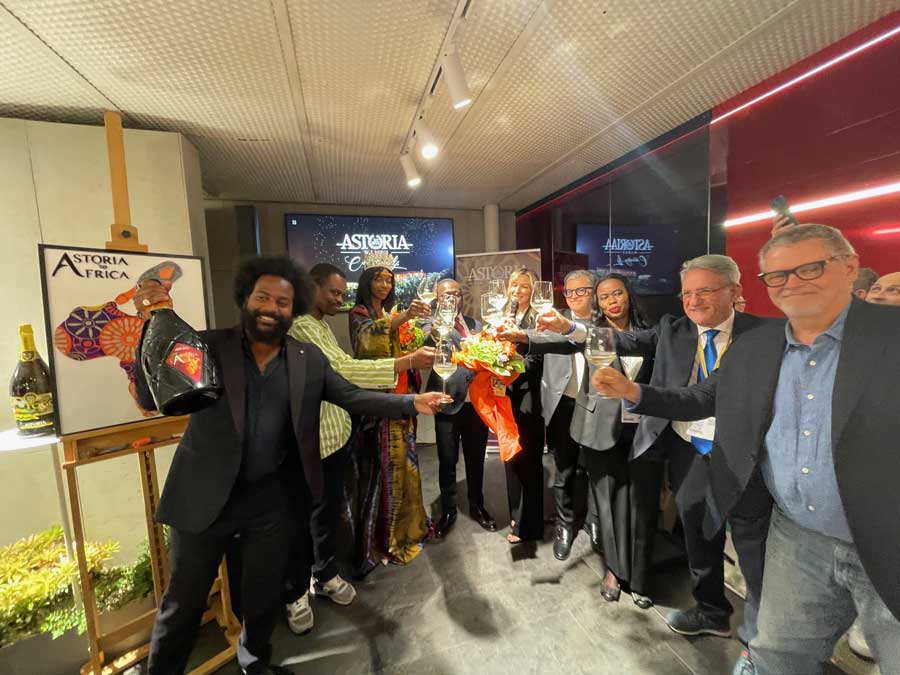
This year we reached one million euros in turnover in continent.“ Astoria has opened the first of 10,000 bottles of Prosecco Superior dedicated to the anniversary.
The toast together with Miss Africa Italy Ngone Gueye, who also brought
a message of integration underlining the bond that Italians have
Afro-descendants represent a spirit for the union of our countries
also underlined by the work of “string art” that the artist Bara Abdoul
Rahim made during the day at the Astoria stand.

WINE: ACCORDING TO EXPERTS AND PRODUCERS, A TOURISM MARKETING LEVER MORE POWERFUL THAN FERRARI AND MORE ATTRACTIVE THAN FASHION.

ANTINORI, CUSUMANO, AND FRESCOBALDI: “A UNIQUE WINE ASSET IN THE WORLD THAT PROMOTES QUALITY ITALY.”

“Wine? I believe it’s currently the most effective marketing accelerator for tourism in Italy, attracting more tourists than fashion, Ferrari, and, without a doubt, more than any ‘Botticelli-esque’ influencer avatar or other ministerial advertising campaign,” said Davide Ciliberti, an expert from the Purple & Noise communications group, at the Vinitaly trade fair currently underway in Verona.

Because wine enters homes and tables around the world, and is the protagonist of special occasions or happy moments. “ Unlike other iconic Made in Italy products,” the expert continues, “it is affordable for everyone and easily stimulates curiosity about its place of origin.”

“And, in terms of geomarketing, it is distributed throughout the world, because if it is true that there is an Italian restaurant in every corner of the world, it is even more certain that on those tables and in the homes of those who frequent them there will be an Italian wine ”, adds Vicky Gitto, an Italian advertiser well-known worldwide.

The data from the recent Aite-Italian Food and Wine Tourism Association Report (2025) confirm that 70% of those interviewed declared that they had taken at least one holiday in the last three years in search of food, wine, oil and all the other typical agri-food products of the Italian territory : with an average annual increase of approximately 13%.

Globally, wine tourism alone is worth nearly €40 billion annually. More than half of this goes to Europe, with France, Italy, and Spain being the preferred destinations, and an average annual growth trend of approximately 13%, even in times like the current one, when the wine market is suffering due to Trump’s various trade wars.

FRESCOBALDI: WITH ART, A COMBINATION OF EXTRAORDINARY ATTRACTIVE POTENTIAL.

“Wine tourism is also growing strongly in Tuscany ,” confirms Tiziana Frescobaldi, president of the Compagnia de’ Frescobaldi Holding and creator of the ‘Artisti per Frescobaldi’ patronage project , “and we see it on our estates: from Perano in Chianti Classico, to Nipozzano, to Pomino, to Montalcino . At Castel Giocondo, where the eponymous Castel Giocondo Brunello di Montalcino is produced, we also have a small hospitality facility where guests can stay and enjoy a unique and immersive experience among the vine rows and the cellar. People come to taste the estate’s wines and also to savor a bit of our history. And right at Castel Giocondo, since 2012, we have launched a project that unites wine and contemporary art: ‘Artisti per Frescobaldi’, which boasts a collection of works by Italian and international artists inspired by the region and the world of wine, open to the public. public” .

“We believe in the combination of wine and art: together with cuisine and the beauty of our landscape, they form a perfect alchemy, unique in the world .” In fact ,” Tiziana Frescobaldi continues, ” I was recently in Korea , at the embassy, to talk about Made in Italy and the perception of a country experiencing great and rapid growth and whose culture, even in terms of food tastes, is so different from our own. Art, wine, and cuisine represent the aspects of greatest appeal and interest . A unique example in the world, in which, in my opinion, we must continue to invest and progress in terms of quality, the value of our products, and care for the landscape and such generous nature.”

ANTINORI: WINE THAT TELLS ABOUT TERRITORY AND HISTORY, WHICH FASCINATES THE WORLD.

“Wine certainly represents an extraordinary vehicle for understanding local areas,” comments Allegra Antinori, Vice President of Marchesi Antinori , who oversees hospitality at the company . ” But for us, its added value lies above all in its ability to convey a deeply rooted and continually evolving tradition . Our wineries were created with precisely this intention: to be places that express and enhance the local area, fully integrated into the landscape where the wine takes shape. It is there that our history is preserved, but also the most contemporary and innovative side of our work. We see it every day; at the Antinori winery in Chianti Classico, where the long winemaking tradition is an integral part of the identity of a historic wine-producing area like Chianti Classico, as well as at Le Mortelle in Maremma, where we tell the story of a territory still partly undiscovered.

“Each of our properties,” continues Allegra Antinori , “has its own cellar and its own hospitality approach, designed to welcome our guests and guide them through a journey of discovery of a place, its history, and its identity. When this bond is created, wine becomes a memory: a story that continues through time and, once rediscovered in the glass, naturally draws us back to the land from which it originates. And it is precisely in this profound connection with the land that, in our opinion, lies its strength, even from a tourism perspective.”

CUSUMANO: ETNA TODAY A SUPER-DESTINATION THANKS TO ITS WINE AND ITS PRODUCERS

Producer Diego Cusumano, of the Sicilian winery of the same name , also agrees with the marketing managers. ” Our wine ,” explains the Sicilian winemaker, ” is distributed across five continents, both personally and through exporters, and is presented daily, exalted as a product of our land, Sicily. And our customers, in appreciating our wine, also become passionate about its place of origin, that territory, which the vineyard itself makes beautiful, makes a landscape. Just think ,” explains Cusumano, ” of Etna twenty years ago and Etna today: a super-tourist destination thanks to the wine and its producers, who, by promoting themselves over the years, first piqued the curiosity of wine lovers, then activated word of mouth, then won over wine tourists, and finally made it a world-class destination today. With the associated spin-offs and benefits.”
“And the same – continues the producer – is true for all the places in Italy, from the very famous Chiantishire to the small villages and territories, each of which gives us its product, its label, tells its story, its tradition, the ‘soul’ of that place” .
Add it all up and in one fell swoop you have the most massive territorial marketing campaign in our country which brings in so many new arrivals and is the best antidote to overtourism” confirms Vicky Gitto.
CRISTINA MERCURI, MASTER OF WINE: WINE BUILDS A QUALITY IMAGINATION THAT STRENGTHENS THE ENTIRE COUNTRY SYSTEM

“Wine can certainly be a marketing lever for Made in Italy and for tourism, but the definition is limiting: wine is above all a cultural and economic infrastructure capable of generating long-term territorial reputation and desirability,” says Cristina Mercuri, the first Italian woman to achieve the prestigious title of Master of Wine (MW), the highest and most prestigious title in the wine world (awarded by the Institute of Masters of Wine (IMW) in London, which certifies exceptional expertise not only in tasting, but also in viticulture, oenology, wine trade, and marketing – editor’s note). She continues, ” The case of the Langhe–Roero–Monferrato wine landscapes, recognized as a UNESCO World Heritage Site, demonstrates how wine can activate a broader ecosystem involving hospitality, gastronomy, and international investment. At the same time, it also highlights potential critical issues, such as the risk of tourism pressure and the standardization of local identity. This confirms that wine is a very powerful lever, but requires strategic vision to preserve authenticity and consistency.” Wine doesn’t just promote a product; it builds a sense of quality that strengthens the entire country . For this potential to be fully realized ,” the expert concludes, ” it’s necessary to invest in structured management and long-term strategic coordination.”

THE PROPOSAL: LESS PUBLIC MONEY FOR ‘ VENUS INFLUENCERS’ BUT INVEST IN ‘BACCHUS’

And the great commitment of individual producers who, by promoting their products, tell the world about the best of Italy, ” adds Davide Ciliberti of Purple & Noise PR, ” should be concretely supported by the government and local administrations. Rather than squandering so much public money on ineffective marketing and communications campaigns, which are also uncoordinated and lack a medium-term plan, they should allocate to winemakers the vast amounts of funds that the state, regional governments, and even local tourist boards sell for tourism and spend without much return ( how much influx did the ‘famous’ influencer avatar of Botticelli’s Venus bring us? ). And if it’s not money, at least let it be tax breaks for those who communicate by contributing to a national communications plan.”


Style Selector
Select the layout
Choose the theme
Preset colors
No Preset
Select the pattern