

We present a selection of wine resorts and relais where your stay becomes an integral part of the wine tourism experience: selected addresses nestled among vineyards, featuring signature cuisine and charming hospitality, designed to showcase an Italy of wine increasingly devoted to experiential tourism. A journey through some of the country’s most iconic destinations, where winery, hospitality, and the local area come together in an authentic way.
Wine tourism in Italy is evolving toward an increasingly structured model, where hospitality becomes an integral part of the experience . Not just visits and tastings , but stays built around rooms nestled in the vineyards, on-site dining , and dedicated services. A cross-section of offerings that allows for the creation of themed getaways through some of the country’s most iconic areas.
Among the most active groups in this field, Tommasi Family Estates represents a true icon in the development of an integrated winery and hospitality system. In the heart of the Valpolicella Classica region, between Verona and Lake Garda, the Tommasi winery complements its production with Villa Quaranta Tommasi Wine Hotel & SPA , a historic 20,000-square-meter estate built around a 17th-century villa surrounded by greenery. The property, built around a 17th-century villa, boasts 76 rooms, soon to expand to 110. The spacious and differentiated rooms are furnished in three distinct styles—traditional, contemporary, and exclusive—three distinct and authentic souls, designed to reflect each guest’s personality. Completing the experience is the Terme della Valpolicella thermal spa , with indoor and outdoor pools fed by salt-bromine-iodine water. A gastronomic offering encompasses the Borgo Antico, Cantina in Villa, and a comprehensive wine list with over 1,300 labels, further enhancing the connection between hospitality, wellness, cuisine, and the local winemaking tradition.
Also part of the Tommasi Family Estates is the Albergo Mazzanti , in Verona’s historic center, with 16 rooms nestled in a medieval tower overlooking the Case Mazzanti. A more urban offering, with intimate and thoughtful spaces, it connects to the city’s culinary scene.
In Tuscany, the group develops hospitality through Poggio al Tufo , an estate in Maremma where wine production is combined with a farmhouse surrounded by vineyards. The rooms, located in a renovated farmhouse, maintain a simple rural style, while the restaurant offers straightforward Tuscan cuisine, based on iconic local dishes and local produce.
Also in Tuscany, but connected to the Fattoria della Talosa, Villa Talosa represents the winery’s hospitality extension. The property offers spacious, bright rooms for small groups, with a total capacity of approximately eight beds, a panoramic swimming pool, and views of the Montepulciano vineyards. The experience is rounded out with tours and tastings related to the production of Vino Nobile, creating a direct connection between your stay and the winery.
In the Chianti Classico region, the Dievole estate combines its wine production with a sprawling wine resort, one of the region’s most recognizable icons. The rooms and suites are spread throughout a restored historic hamlet, with spaces that combine traditional materials with contemporary comforts. Room types range from more intimate rooms to suites with living areas and vineyard views. The on-site restaurant completes the experience with contemporary Tuscan cuisine crafted in direct harmony with the estate’s wines, making Dievole a destination in its own right.
In Piedmont, the historic Poderi Luigi Einaudi winery integrates its winemaking operations with a B&B retreat nestled in the Langhe. The rooms—ten in all—seven doubles, a junior suite, and two suites, do not follow a standardized hotel concept. Each is designed as a lived-in room, with original furnishings from the Einaudi family and details that convey the feeling of being guests, not customers. It’s a hospitality that isn’t intrusive, but welcomes with ease, leaving room for an increasingly rare luxury: intimacy. The experience unfolds seamlessly with the winery, through guided tastings and wine discovery tours, while the dining experience is spread across local restaurants and trattorias, selected to offer an authentic account of Langhe cuisine and create a gastronomic itinerary consistent with your stay.
Still focused on wine production, Le Colture complements its Prosecco DOCG business with the Agriturismo Prime Gemme . The property offers four rooms converted from a 1920s farmhouse, featuring wood and stone interiors and views of the vineyards and the Piave River. The experience is rounded out by the opportunity to explore local wineries and restaurants.
Also in Veneto, the GHV Hotel & Spa is nestled in a different yet complementary setting, where hospitality is intertwined with the region’s rich history through its dining experience. The 80 rooms and suites and over 300-square-meter spa define a contemporary structure, while the Wine Room restaurant by Luca Tegon offers fine dining cuisine built on technique and local heritage.
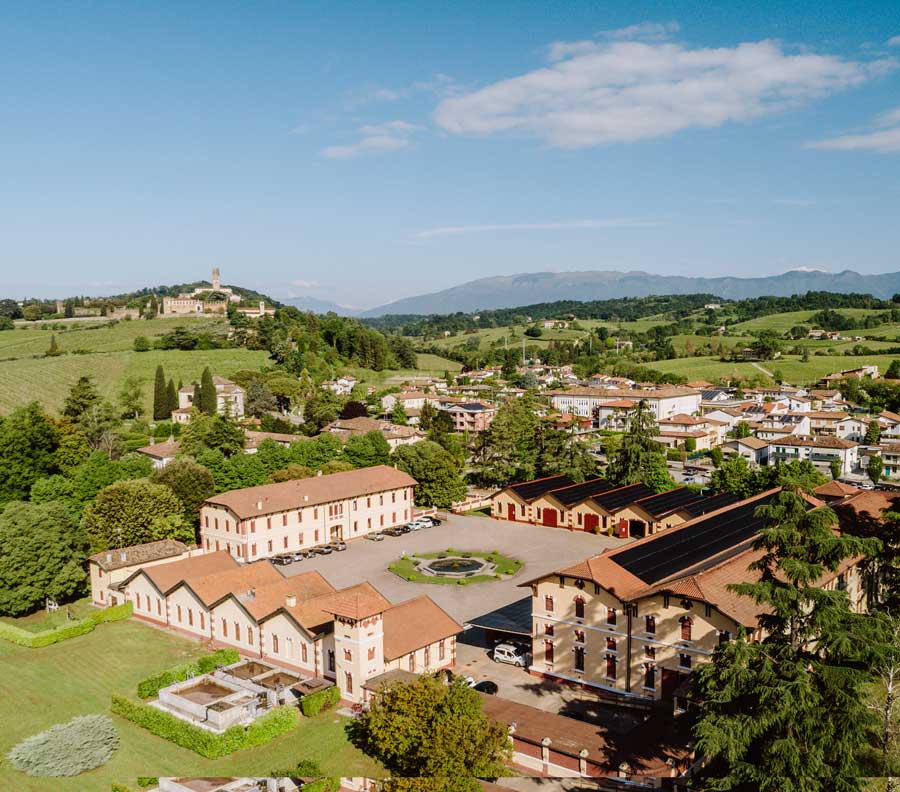
The hospitality of Conte Collalto , in the heart of the UNESCO Prosecco Hills of Conegliano and Valdobbiadene, between Susegana and the medieval village of San Salvatore, is developed through a refined project that combines hospitality, historical heritage, and landscape. The apartments in the central body of the winery, the residences in the medieval village dedicated to the noblewomen of the family, and the frescoed suites of the Castello di San Salvatore offer different accommodation options, all sharing a strong connection to the identity of the Collalto estate. Added to this is Castello San Salvatore Relais , which expands the experience with residences and apartments nestled in a setting of great architectural charm, where history and contemporary comfort harmoniously coexist. This hospitality system is designed to experience the area through vineyards, cultural itineraries, and slow tourism itineraries, such as the Monaco-Venice and the Strada dei Castelli. The offer is completed by Casa Vigneti , a recently renovated farmhouse dedicated to high-profile private and corporate events, confirming the estate as a reference destination for exclusive stays, wine tourism experiences and discovery of the Alta Marca Trevigiana.
Tenuta di Castellaro in Sicily promotes slow and mindful tourism. Its winemaking project, closely tied to its history and landscape, showcases the unique territory of Lipari, the largest of the Aeolian Islands. In addition to staying at the winery’s stunning Wine Resort, comprising three residences (Casa Pomice, Casa Ossidiana, and Casa Caolino) nestled among vineyards and caper groves, the estate offers tastings and experiences, including a toast in the sun and a picnic in the vineyard. Castellaro Bistrot opened last year, and since 2026 has been led by the team of chef Giuseppe Geraci, along with Alessandra Quattrocchi of Modì in Torregrotta, offering traditional dishes with a contemporary twist, not without some unexpected influences.
Overall, these businesses shape an increasingly defined geography of wine hospitality in Italy: a vibrant and recognizable system, in which cellar, guest rooms, and cuisine interact seamlessly, offering new ways of traveling and discovering.