A network portal of Wine Idea. Discover the world of Wine idea

Wine Trends and Performance in Italy — Week 8–12 December 2025

The week of December 8–12, 2025, captures an Italian wine in a “two-speed” phase: a major reputational and cultural boost (with the long-lasting impact of UNESCO recognition of Italian Cuisine), but also real economic tensions on exports and consumption.

In the middle, a rather clear winner: whites and sparkling wines (with Prosecco being the driving force), supported by new, more “everyday” consumption styles and a young target audience.

Red wines and categories more closely tied to traditional consumption are suffering the most, while the HoReCa channel remains a battleground where positioning, distribution partners, and the ability to activate sell-out make the difference.

1) UNESCO: Italian Cuisine Recognized, Wine Claims Centrality (and Economic Value)

UNESCO’s recognition of Italian Cuisine as an Intangible Cultural Heritage of Humanity is seen by the industry as a sign of energy to restart in a challenging time. The key message: wine is not an accessory, it is a structural part of Italian dining culture.

  • Uiv (Frescobaldi/Castelletti) underlines the impact not only symbolic but also industrial: wine contributes to wealth and employment, with a positive foreign trade balance indicated at around 7.5 billion euros/year .
  • Federvini interprets the award as a reward for a comprehensive culture of conviviality, where wines, spirits, and vinegars are pillars of identity; and connects it to new perspectives for promoting Made in Italy products and food and wine tourism .
  • Città del Vino (over 500 municipalities) reaffirms the link between production, culture, development, and territorial identity.
  • Veronafiere/Vinitaly links the theme to international promotion through its own platforms (Vinitaly and the trade fair “ecosystem”).
  • Federdoc emphasizes an additional responsibility: protecting and promoting Designations of Origin as a guarantee of quality, traceability, and sustainability.
  • Fivi recalls the concreteness behind the “intangible heritage”: people and territories, especially internal areas , avoiding “embalming” tradition and focusing on economic and social innovation.
  • Assoenologi promotes the food-wine union as a historically successful combination, now strengthened by global recognition.

Operational implications: Recognition becomes a powerful narrative and commercial lever, but it only works if translated into action (promotion, wine tourism, DO protection, training, territorial oversight).

2) Consumption: less quantity, more selection. Reward freshness and drinkability.

A clear pattern emerges on the domestic market: people drink less often , domestic purchases are more selective , “special occasions” are on the rise, and categories perceived as more contemporary are prevailing. The focus is shifting toward fresh, versatile, and (partly) lower-alcohol wines , with a growing awareness of well-being and lifestyle.

In this week’s story, this transformation isn’t a collapse: it’s a constant erosion of traditional consumption, with demand redistributed toward segments that are easier to integrate into everyday life.

3) Sparkling wines: structural resilience and a driving force for young people. Prosecco, a global player.

The data and analyses cited confirm that, despite a difficult 2024, sparkling wine is holding up better than still wines in key markets and is strongly appealing to Gen Z and Millennials : bubbles are moving away from the sole logic of “celebration” and entering informal consumption.

Key points emerged:

  • Prosecco growing especially in the USA and France , more static in the United Kingdom (signs of a “peak”).
  • Champagne in difficulty in three markets: its premium positioning and higher prices make it more vulnerable in a phase of economic uncertainty and “down-trading”.
  • Space is opening up for “sidebar” but growing categories: flavoured sparkling wines (USA) , Crémant (France) , English sparkling wines (UK) , and cocktails/spritzes as occasional drivers.

Strategic reading: to grow, simply “making bubbles” isn’t enough; you need to manage consumption moments (aperitifs, informal gatherings, cocktail culture) and speak the language of younger audiences without distorting their identity and quality.

4) US exports: a loud alarm bell (and one to be handled without panic)

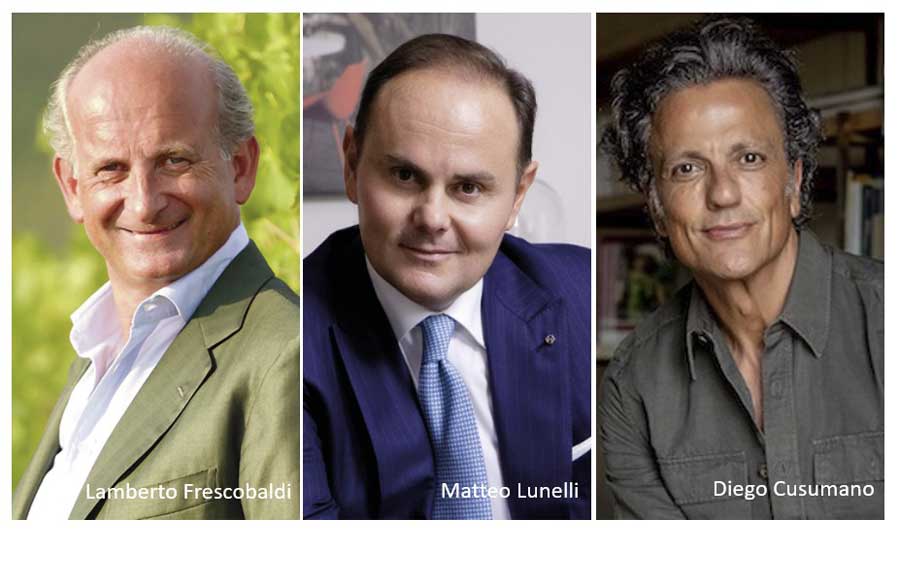
Lamberto Frescobaldi (UIV) reports a stark figure: approximately €110 million lost in three months on the US market compared to the same period in the previous year. The picture he describes is one of weakened demand and cautious distribution.

  • Italian wine exports to the USA: from 12.5% in value in the first quarter (driven by pre-duty frontloading ) to -4% in the first nine months , with -23% in the last quarter .
  • Average price leaving American distribution increased by approximately 4/5 points in October.
  • Retail orders for the Thanksgiving period did not pick up as expected.

Operational implications: the key word is “crisis management”: market diversification, work on shelf rotation and perceived value, avoiding both catastrophism and superficial optimism.

5) EU Rules: “Wine Package” between simplification and new categories (No/Low alcohol)

This week saw positive feedback for the EU’s political agreement on the Wine Package , seen as a step towards greater regulatory clarity and business stability. Among the elements highlighted:

  • Simplifications on labelling (including push for a harmonised symbol for access via QR code).
  • Greater continuity and access to CMO measures.
  • Promotion in third countries with extension of programs for up to 9 years (project stability).
  • Recognition of wine tourism as a strategic lever.
  • Clarifications on the wording for dealcoholized products: “alcohol-free” with “0.0%” below a very low threshold; and “alcohol reduced” for products above certain thresholds and with a significant reduction compared to the starting category (excluding the wording “low alcohol”).

Operational implications: Simplification can free up energy (less bureaucracy, more planning), but the real challenge will be implementation: consistency, timing, and interpretation.

6) HoReCa Italy: market “at breakeven”, but sparkling wines are an exception

In the HoReCa channel, the overall picture is one of slowdown, with the sector projected to close to stability by 2025. Within this scenario, however, sparkling wines stand out as the most dynamic segment.

Data and indications of the week:

  • Wine accounts for approximately 17% of beverage distributors’ revenue ; sparkling wines account for 33% of wine sales in the HoReCa sector.
  • In the world of sparkling wines, Prosecco accounts for 47% of category sales (almost half the market).
  • Signs of difficulty with alcoholic beverages (decreases in wine and beer consumption were reported in some periods), requiring targeted strategies.

Strategic lines suggested by the content:

  • Abandon the logic of just sell-in : we need to move the product to the point of consumption ( sell-out , activations, training).
  • Choose distribution partners carefully (the market is extremely heterogeneous in terms of size, philosophy, and impact of wine).
  • Clear positioning (target and context of use), network support, measurable initiatives and benchmarks.

7) Territories: Collio as a “case study” of white wine endurance

Among the denominations, Collio is described as recovering despite difficulties (taxes and the November flood). Key message: white wines are holding up . Mentioned are:

  • Stable sales across key price ranges and markets.
  • US exports from Collio are expected to decline by around 10% , a decline deemed absorbable with diversification.
  • Northern Europe is positive, Germany is stagnant; China has potential but is inconsistent; Southeast Asia is interesting for its food pairings, but requires promotional work.

Operational implication: Resilience is not “automatic”: it is the result of a market portfolio, consistent positioning, and continuous investment in demand.

8) Outlook 2026: Moderate rebound possible, driven by whites and bubbles

The week ends with a more “breathable” horizon for 2026: stabilizing inflation and the disposal of inventories in some markets open the possibility of a moderate rebound in demand , with white and sparkling wines as the main drivers and more contemporary communication capable of engaging new segments.

At the same time, authoritative voices (such as Carlo Ferrini) urge us to combine realism and confidence: the crisis is multifactorial (overproduction, prices, wars, generational change), but it is also a transformation that can be governed.

Final summary

During the week of December 8–12, 2025, Italian wine is experiencing a typically Italian paradox: at its peak cultural and identity strength (UNESCO) while battling a complex market environment (a slowing US market, more selective consumption). The clearest trajectory, however, emerges clearly: accessible premium, fresh, drinkable, sparkling wines and whites , with more rigorous focus on channels (HoReCa) and markets (export diversification), and with EU regulations that, if properly implemented, can reduce friction and increase the supply chain’s investment capacity.

Wine press review for Tuesday December 9 – 2025

Wine news, Italian wineries and wines.

A common thread ties everything together: a sector undergoing a transformation, with new strategies, market pressures, stories of places and people, and a calendar of events that continues to energize the wine community.

Italian wineries

Argea and the Risk Game of Italian Wine. The group led by Massimo Romani continues to expand, even in a year marked by tariffs and volatility. After the acquisition of the American importer WinesU and its nomination as Best Importer 2025 by Wine Enthusiast, Argea confirms its mission: to grow in size, solidity, and ability to seize M&A opportunities. The Ministry of Economy and Finance (MEF) decree on the first dealcoholization plant in Italy is pending.

Moncalisse: the new “mountain” winery for Trentodoc is born. Julia and Karoline Walch are launching their own winemaking project in Civezzano, separate from the Elena Walch brand. Located at 600 meters above sea level, it faces south and has an identity that blends terroir and the elegance of the classic method.

Cantina Terre del Barolo celebrates its vineyard workers. An artistic roundabout, two hands—one white, one black—and a bunch of grapes: a clear message in an increasingly international region. A tribute to the foreign workers who keep the Langhe winemaking tradition alive.

Tenuta Argentiera: a dialogue between wine, art, and the land. On the hills overlooking the Tyrrhenian Sea, the estate hosts three works by Giuseppe Bergomi as part of the “Arte Diffusa sulla Costa Toscana” (Widespread Art on the Tuscan Coast) project. A virtuous blend of landscape, culture, and hospitality.

Muzic Winery: A Border Tradition That Continues to Grow In San Floriano del Collio, the Muzic family continues a story that began in 1927. Today, two generations collaborate on quality and sustainability, with an eye to the future.

Taste the Territory – Tenuta San Vito Takes Center Stage. Caffè Centofiori in Montelupo Fiorentino hosts the fourth stop of the initiative dedicated to local wineries. San Vito presents five wines paired with five dishes, revealing its identity amidst Chianti Colli Fiorentini and organic olive growing.

Castello di Gussago shines at the Merano WineFestival Four WineHunter Awards for Animapura 2018, Pomaro 2018, Club Cuvée 2019 and Nobleblanc SA A confirmation of the qualitative strength of Franciacorta production.

Cantina Frentana grows despite tariffs and declining consumption. A positive year for the Abruzzo-based cooperative, which consolidates its merger with Cantina San Giacomo and exceeds 650 members. A sign of cooperative resilience in a challenging environment.

Gaierhof, three sisters and a low-alcohol model that sets standards. In Roverè della Luna, the Togn family is spearheading an innovative, all-female project. A product-focused business that combines family history with new insights into moderate drinking.

Cusumano Brut 700 Metodo Classico 2021 From vineyards at 700 meters, an elegant classic method that celebrates Tenuta Ficuzza: free-run must, refermentation in the bottle and 36 months on the lees.

Tenuta Stella – Reserves for an “alto Collio” Christmas Ribolla Gialla, Friulano and Merlot Riserva make up the Luxury Christmas 2026 Collection : organic, artisanal and profoundly territorial wines.

Italian wine and Italian oenology

Prosecco DOC: green light for 6,000 new hectares. Veneto and Friuli have authorized an increase in production potential to meet demand pressure. The total area will reach 30,500 hectares, with growth in two phases.

Kaolin or zeolite? Natural choices for crop health. Both permitted in organic farming, these two minerals offer different functions: kaolin acts as a physical and protective barrier, while zeolite supports moisture management and canopy health.

Grape prices are plummeting: 2025 will be the “year of the collapse.” Prices are down as much as 40% for some appellations. Production is rising, consumption is declining, exports are slowing, and inventories are high: a combination that is crushing winemakers and putting strain on the supply chain.

CMO Wine: EU agreement on simplifications and new labeling. Coldiretti expresses satisfaction: no five-year restrictions for those who uproot vineyards, greater transparency for dealcoholized wines, and more flexibility in support programs.

The taste of moderation: drinking less, drinking better. Stada Health Report and NielsenIQ converge: the majority of Europeans are pursuing a healthier lifestyle. Conscious consumption is gaining ground, and demand for premium wines and guided experiences is growing.

Bringing wine to dinner? A gesture worth rereading. A provocative article overturns a social custom: bringing wine can create unwanted dynamics of reciprocity. If you really want to give something, olive oil is better.

Archè 2020: Francesco Saverio Russo’s glasses are back with free shipping. A collection born during lockdown, now a benchmark for high-end artisanal glassware. A project in collaboration with VDglass.

International

Champagne: Between Perpetual Reserve and Solera, Clarity Is Needed. Alice Paillard clearly distinguishes the two practices: the solera as a closed oxidative system, the perpetual as a continuous evolutionary method. Two different philosophies that are often confused in commercial narratives.

Italy is a superstar in international blind tastings. One in four tastings sees Italian wines win, including in the bulk wine category. This is a sign of widespread quality, not just among the elite.

Denmark: “A Glass of Italy” returns. In January 2026, over 25 Italian wineries will be featured in Copenhagen, with Vermentino masterclasses and tastings open to the public and professionals.

Wine events and local culture

EiM – The Landscapes of Soave: A Hike Through Stone and Vineyards On December 7th, a guided tour of the volcanic hills of Soave, exploring geology, history, and viticulture.

Introductory wine courses in Barberino di Mugello. Starting February 6, 2026, six meetings with tastings will teach you the basics of wine and promote responsible consumption.

Conclusion

Thanks for listening: today’s press review was brought to you by WINEIDEA.IT . The sector continues to move in multiple directions: production complexities, new consumer aesthetics, and industrial strategies that are rewriting the map. Tomorrow brings another chapter to this great story.

Updated wine report with projections for the period December 1 – 2025 – March 31 – 2026.

Based on the latest news and data available as of early December 2025 — with projections for the period December 1, 2025 – March 31, 2026.

Current situation: global and Italian context.

Production and global market

  • After the production crisis of recent years, global wine production appears to be recovering slightly: volumes are estimated to increase in 2025 compared to 2024, although remaining below the five-year average.
  • However, global demand continues to show fragility: inflation, economic uncertainty and changes in consumption (greater attention to health and lifestyle) are compressing both volumes and spending on wine.
  • In this context, segments such as premium sparkling wines, organic wines, or products with a strong territorial identity are identified as the main opportunities for maintaining value and margins.

Scenario for Italy

  • Italy confirms its world leadership in export volumes, with estimates of approximately 22 million hectoliters exported by 2025.
  • The value of exports remains high: it is estimated to be around 8.1–8.2 billion euros in 2025.
  • Despite this, exports showed signs of weakness in 2025: data updated in July indicate a decline of -0.9% in value and -3.4% in volume compared to the same period of the previous year.
  • At the same time, domestic consumption continues to be weak and in slow but steady decline compared to previous generations, reflecting a change in consumption styles and a less frequent “everyday” wine consumption.

Trends driving the industry – and strategic “guidelines” for 2026

Based on recent data and market evolution, some structural trends emerge that I expect will characterize the period December 2025 – March 2026, and probably beyond:

  • Premiumization and valorization of territorial identity : wines with a strong identity (DOC/DOCG, sparkling wines, white wines, superior quality) maintain better potential than “commodity wines”. In particular, sparkling wines and white wines seem to better capture new preferences.
  • Diversification of offerings and packaging : alternative formats, organic or sustainable wines, and a greater focus on sustainability and perceived value (not just “quantity,” but experience, quality, and storytelling) as a competitive lever.
  • Market polarization and the need to reduce dependence on a few large buyers/areas : as highlighted by overall agri-food exports, geographic concentration (a few countries absorb the majority of Italian wine) remains a vulnerability.
  • Adapting to changing consumer trends : consumers today increasingly seek authenticity, sustainability, and territorial authenticity; “everyday” wine is losing ground, while demand for wine as an experience, a story, and a lifestyle grows.

Implications for wineries and for those of us who offer strategic consultancy

For a winery or for a valorization / acquisition / sale operation, these dynamics suggest:

  • Focus on premium and identity labels : in a market with abundant supply and selective demand, differential value weighs more than volume.
  • Consider geographical diversification of exports : focus not only on traditional large markets but also explore less saturated countries or niches, reducing the risk of dependence on a few markets.
  • Promote sustainability, transparency, and brand history : the modern consumer seeks authenticity and perceived value, not just low price.
  • Integrate the offering with experience and services : wine tourism, storytelling, direct-to-consumer, packaging and differentiated products can increase perceived value and loyalty.
  • Carefully manage inventory, stock, and cash flow : 2025 has shown that production is okay, but the market is selective — rigorous financial and commercial planning will be a competitive advantage.

Forecast 1 December 2025 – 31 March 2026 (continuity line)

  • Italian exports are expected to remain close to 2025 levels, with potential stabilization or slight growth, especially if wineries successfully position themselves on quality and identity.
  • The “mainstream low-price” segment will come under further pressure — opportunities for consolidation, batch selection, and production rationalization.
  • Premium, organic, territorial/sparkling/labels with strong storytelling niches will likely gain relative weight, both in international markets and in the developed domestic market.
  • For those who own wineries or plan mergers and acquisitions, this will be a critical time to select quality assets, enhance brands and reputations, and prepare the ground for a more robust recovery when (or if) the global economy returns to stimulate consumption.

Wine Trends in Italy – Week 1-5 December 2025

The Italian wine world enters winter 2025 with a complex picture, one of light and shade, featuring divergent market dynamics, international tensions, and signs of industrial resilience.

The sector is undergoing a profound transformation: consumption is changing, export geographies are reconfiguring, Prosecco continues to drive growth, while companies seek new balances between production, cost management, and strategic repositioning.

The global bubble race: Prosecco remains the driving force of Italian wine.

Del Rey Analysts’ snapshot confirms that sparkling wines remain the most dynamic axis on the global scene, with a turnover of 8.5 billion euros , despite a physiological slowdown in volumes.
Italy dominates in terms of quantity: 519 million liters exported , equal to almost half the world’s volume, and a value of €2.4 billion . The epicenter is Prosecco, which has seen exports grow 276% over the last 16 years, surpassing Champagne and Cava in growth dynamics, thanks to three key elements: taste, image, and distribution capacity.

On the price front, Italy has shown a 64% increase since 2009, higher than France and Spain, although it remains far from the value per litre of Champagne.

This week confirms one fact: Prosecco’s strength comes not from its price, nor from a technological advantage, but from its ability to interpret the desires of the contemporary consumer. It’s a global case study.

Luxury wine and spirits: a contraction in 2025, with few exceptions

The high-end segment is going through a delicate phase.
According to the Altagamma Observatory, luxury wines and spirits are expected to decline by 5% in 2025, penalized by more selective consumption, high prices, a slow pace of growth in the Chinese market, and a lower propensity to spend among those under 40.

Under pressure:

  • premium spirits (-4/-6%)
  • Cognac in decline
  • high-end still wines

Going against the trend:

  • French bubbles , driven by hedonistic consumption
  • Italian reds , which resist thanks to the strength of their identity and origin
  • rosé , increasingly in demand in international fine dining

A timid recovery is expected in 2026 (5%), but it remains a market phase where perceived value, experience and authenticity weigh more than the brand alone.

Italian exports amid global tensions and new growth paths

The Federvini Observatory confirms a phase of “realignment” of global flows, with Italian wine which, although slowing down, is holding up better than its French and Chilean competitors .

The US picture is the most critical part:

  • wine: –4.8%
  • spirits: –5%
  • last quarter: –23% , combined effect of tariffs and drop in purchasing power

To compensate, new trajectories arrive:

  • Germany 8.8%
  • Brazil 8.7%
  • Italian spirits boom in China : 94%

The sector is moving from “habitual” consumption to “choice” consumption: less frequent, more perceived value.

Domestic consumption: few certainties but signs of liveliness

In Italy, demand remains cautious, but the search for quality is growing.
The large-scale retail trade records:

  • DOP IGP wine: 0.9%
  • Total PDO and PGI products: 1.1%

The towing are:

  • bubbles
  • alcoholic aperitifs
  • premium vinegars

No-low and ready-to-drink products continue to expand their reach, especially in urban consumption and among Gen Z and Millennials.

Bulk wine: a surprising segment

The World Bulk Wine Exhibition highlights an unexpected phenomenon:
Loose holds up better than bottled.
Exports fell by only 0.3% in value , while bottled wine recorded a 3.1% decline. Varietals and no/low-alcohol products are growing, driven by technological innovation in dealcoholization and the demand for flexible formats (cans, bag-in-box, RTD).

The bulk wine sector accounts for over a third of global volumes and will become increasingly strategic in the coming years.

Italy: High inventory levels and Prosecco tops the list

As of October 31st, Italian wineries recorded:

  • 73 million hectoliters of total wine products
  • 44.5 million wine
  • 14.3 million musts

Inventories are growing (5.2% over 2024), a signal to monitor in a slow market context.
The most stocked wine in Italy is Prosecco Dop with 4.2 million hl .

Veneto dominates, followed by Emilia Romagna, Tuscany and Puglia.

Wine Companies in the “Perfect Storm”: Who’s Resisting and Why?

The Management DiVino study photographs a sector affected by structural criticalities:

  • drop in consumption
  • demographic changes
  • fragmentation
  • cost pressures

Resilience emerges from those who:

  • innovate in the business model
  • aggregates skills
  • invests in wine tourism
  • diversify products and markets

The “asset strong / asset light” dualism is no longer a dogma.
Hybrid models, capable of commercial flexibility and territorial roots, are winning.

Sparkling wines sold in 2024 surpass 1 billion bottles

Despite a difficult 2023 harvest, Italy surpassed a historic milestone. Prosecco DOC (8%), Asolo (20%), Pignoletto, and Lambrusco rosé all grew. Piedmont, Lombardy, and Trentino suffered.

The country remains a “Charmat republic”: 96% of the sparkling wines are produced in autoclaves.

DOP Economy: A Pillar of Italian Competitiveness

The ISMEA-QUALITY 2025 Report certifies a healthy sector:

  • 20.7 billion production value
  • DOP/IGP wine stable at 11 billion
  • export: 7.19 billion (5.2%)

The Northeast remains the driving force, with Veneto, Emilia-Romagna, and Friuli experiencing strong growth.

Tariffs, the US crisis and the need for extraordinary measures

UIV calls for urgent intervention:
Between July and September, the average price of Italian wine destined for the USA dropped by 15.5% , an unsustainable self-taxation.

The Government is allocating €100 million annually from 2026 to 2028 to promote and internationalize its business.

The US case: an empire in difficulty

Napa and Sonoma are experiencing their toughest crisis since Prohibition:

  • consumption down
  • young people far from wine
  • 30% of the grapes not sold
  • Canada lost due to tariffs

A global warning about the end of the expansion cycle of traditional premium wine.

Conclusion: a sector that is changing its skin

The week of December 1–5, 2025 shows an Italy of wine going through a historic transition:
lower volumes, more competition, unstable markets, new languages of consumption.
But also a supply chain that doesn’t retreat: it innovates, resists, adapts, and finds new ways to create value.

The future will not only be written in the vineyards, but in strategic choices: innovation, positioning, aggregation, global market presence, and the ability to interpret a demand that changes faster than supply.

A continuous movement, like a grape harvest that never stops.

Style Selector
Select the layout
Choose the theme
Preset colors
No Preset
Select the pattern