A network portal of Wine Idea. Discover the world of Wine idea

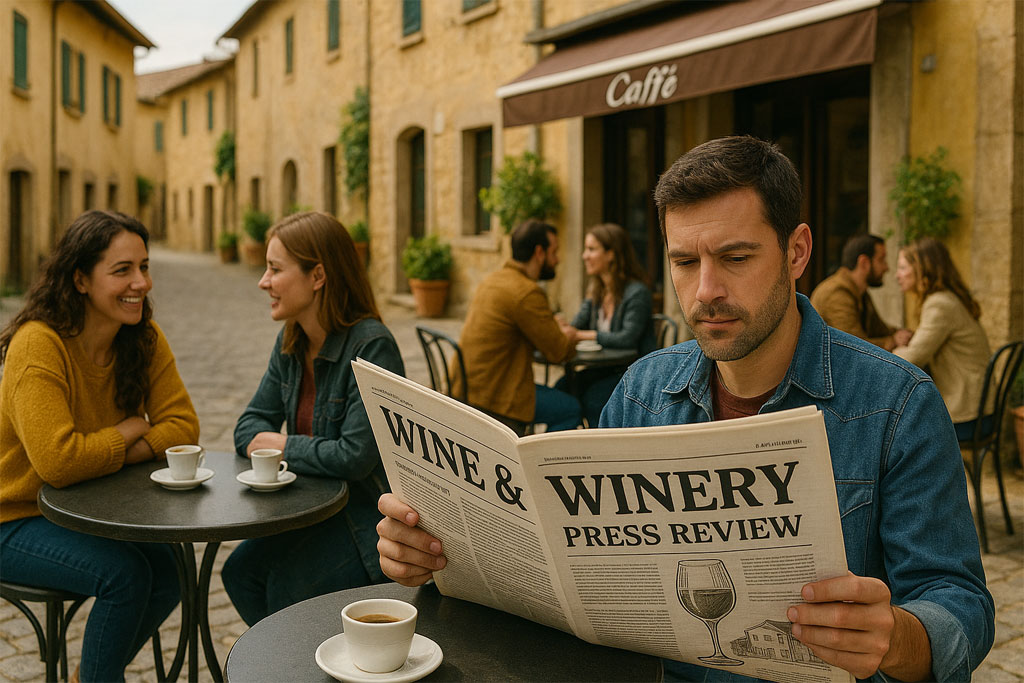
Wine press review for Thursday January 22 -2026

Italian wineries and wines, wine news.

ITALIAN WINERIES

Tenuta San Guido and Produttori del Barbaresco are leading the Liv-Ex 2025. Sassicaia 2020 is the top wine in terms of value traded, while Barbaresco Cooperativa leads the way in terms of volume. Signs of recovery are emerging in the fine wine market, and the concept of “accessible luxury” is reaffirming.

Terre d’Oltrepò Crisis: Losito and Guarini Interested in Acquiring the Cooperative, Optioning Flexible Formulas and Involving Multiple Parties

Colli Zugna Winery: The legal case after years. The legal battle of a historic supplier implicated in the watered-down wine scandal.

Bonotto delle Tezze: six centuries of Raboso and identity. The Venetian dynasty defends the value of territorial identity against the standardization of tastes.

Paololeo – Negroamaro Orfeo 2023 Profile of a family-run Apulian winery producing 5 million bottles, both organic and as a négociant.

Cantina del Taburno: New direction with Enzo Rillo. Industrial and winemaking restyling for a historic Sannio cooperative, with a new winemaker and strategic relaunch.

Cantine Papa: Telling the Falerno Story Through the Territory. Historical and identity-building value as a lever for positioning.

A winery for Tanzania. The solidarity project of priest Kessy Baltazary: first African harvest after his training in Alba.

ITALIAN WINE AND ITALIAN OENOLOGY

Red wine and heart health: A scientific focus on resveratrol, moderate consumption, and cardiovascular benefits.

Luciano Spalletti’s “Rossodiretto” wine. Wine curiosities between football and Tuscan production.

New National Olive Oil Plan: nearly €500 million over 5 years. Public and EU resources to revitalize the olive oil sector.

Agriculture in the 2026 Budget Law: Tax relief on land and agricultural income for direct farmers and IAPs has been confirmed.

New rules for vine nurseries: Mandatory online reporting and new operating rules from 2026/27.

Vinext and Purcari Group: strategic agreement on biotechnology and advanced oenology innovation for the international market.

Confagricoltura Siena: Wine, Health, and Communication. Experts discuss the relationship between responsible consumption, culture, and health.

EU-Mercosur Agreement: What It Means for Wine New trade opportunities but strong political and agricultural tensions in Europe.

INTERNATIONAL

US: Wine industry to decline by 2025, down 2% in volume and 1.6% in value. Focus on direct sales and restructuring California vineyards.

Top Italian Wine Roadshow in Kenya Italian art and wine take center stage in Nairobi with PurpleRyta and Gambero Rosso.

WINE EVENTS

Borgo Capietaglio Restaurant Wine Resort (Bergamo) New wine resort offering hospitality, dining, and its own production.

Weekend in Veneto: 5 wineries to discover. Wine tourism itineraries between Valpolicella, Conegliano, and the Piave River.

Organic Guide 2026: The Award Winners Focus on organic wines and emerging territories in Lazio.

Cantine d’Italia – Go Wine all’Aquila Presentation, guide, and tasting with 911 selected wineries.

Slow Wine Fair 2026 – Bologna Central theme: “The right wine”, between social sustainability and the ethical supply chain.

Visione Vino – the national community is born. The “Cernobbio del vino” in Voghera: TEHA data and strategy for the future of the sector.

Bagnacavallo in a glass Over 500 labels from Italy and Europe in Romagna’s new wine lounge.

Voghera, Capital of Italian Wine. A high-profile national event for the wine sector.

Thanks for listening. Today’s wine press review is brought to you by WINEIDEA.IT . See you tomorrow.

Wine press review for Wednesday January 21 -2026

Wineries, Italian wines and wine news.

Italian wineries

Masciarelli joins Altagamma. The historic Abruzzo winery, led by Marina Cvetic, joins the Altagamma Foundation, strengthening the presence of Italian wine in the luxury and high-end segments (now comprising 22 wine & food brands in the network). A key sign: an increasingly institutionalized premium positioning, with positive effects on reputation and pricing.

Cantina del Taburno (Foglianise): new direction and restyling. Acquired by entrepreneur Enzo Rillo, the winery now boasts a new winemaker (Raffaele De Marco), updated labels, and new wines (including a Sannio DOC Barbera made from Camaiola grapes). Key developments include an industrial and commercial relaunch through product, image, and expertise.

Sankt Pauls: Evolution of the top-of-the-line wines (Appiano, Alto Adige) Historic cooperative (1907): new governance and sales team, focus on freshness and elegance in top-of-the-line wines, with a significant membership base (190 members, 187 hectares). Key signal: the cooperatives are “representing themselves” with a clearer identity and channel strategy.

Sankt Pauls relaunches itself: “Pinot Bianco flagship.” Repositioning on the domestic market: territorial identity, streamlining the range, and pushing into the HoReCa sector (a marginal presence in large-scale retail trade). Key signals: fewer labels, greater recognition, and greater commercial presence.

Colli Zugna Winery: 97-year-old supplier seeks justice. A landmark legal case (fraud/dilution) involving suppliers has resurfaced, reinforcing the issue of “responsibility and protection” along the supply chain. A key sign: governance, oversight, and transparency remain reputational assets.

Marchesi di Barolo: Monument in Turin to Marchesa Giulia di Barolo. A cultural and identity-building tribute that intertwines wine, history, and social impact (Opera Barolo). Key message: the value narrative (not just the product) continues to generate brand capital.

Italian wine and Italian oenology

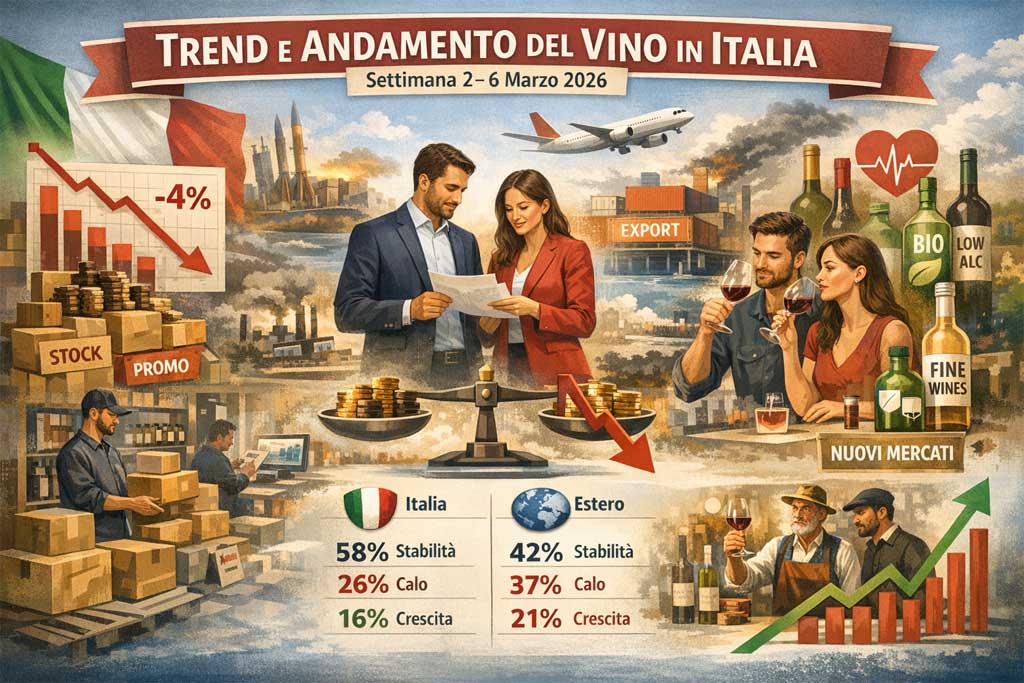
Too much wine in the cellar: inventory on the rise (MASAF data) . As of November 30, 2025: 53.4 million hl of bottled wine in storage (8.6% vs. 2024), musts and fermenting wine . In the Northeast, Prosecco DOC is holding up, but Pinot Grigio DOC Delle Venezie, IGP Veneto, and Soave are growing strongly. Key signal: “oversized” market → pressure on prices, rotation, and inventory management.

Dealcoholized wines: Castel invests and pushes to expand to appellation wines. A €10 million investment in the Loire Valley, using low-temperature vacuum distillation technology (goal: preserving aromas and structure). Key signal: no/low alcohol goes from being a curiosity to becoming an industrial infrastructure.

Consumption: Ethical Quality (Food Wine & Co, Rome Tor Vergata – Gambero Rosso) Consumers, amid inflation and a decline in premium consumption, demand consistency: “good” isn’t enough; they need credible ethical choices. Key message: sustainability and values aren’t just claims: they become purchasing criteria.

Gambero Rosso: The best Barbera d’Asti wines receive awards. Focus on the grape variety and the Monferrato region (DOCG since 2008) and its diverse soil and climate. Key finding: “classic” appellations continue to generate engagement when well-presented.

Terroir and soil: identity irreplaceable by technology. Reflection (Corriere Vinicolo) on the role of soil and the distinction between “varietal” and “terroir” wines. Key message: identity and sustainability depend on understanding the soil’s limitations, not just on practices.

Distribution as a “sentiment hub.” From the discussion in Rome: after the post-Covid euphoria, 2026 is seen as a year of adjustment (cautious consumption, health, less cultural appeal, still high supply). Key signal: those who distribute filter the market reality: it pays to listen to them.

Volcanic Lazio and “outsider” choices (Federico Veronesi / Tenimenti Leone) A return to the land and agricultural practices as a counter-current strategic choice in a “difficult” territory. Key signal: true differentiation arises when the strategy embraces complexity, not when it avoids it.

International

Wine tariffs: European producers call for unity. EU-US tensions are resurfacing: producers are demanding a “unified” response, without hysteria. Key signal: geopolitical risk = concrete trade risk, especially in the US.

Wine events

Fattoria La Maliosa (Saturnia): “Love is Blind” – blind tastings (February 12–15) Experiential format for Valentine’s Day: blind tasting (3 natural EVO wines) and platter. Key takeaway: wine tourism = memorable experience, not just tasting.

Andar per Cantine – LIVE (Livorno, March 7–8, 2026) Launch event for the Tuscan wine tourism guide: “Wine Comes to the City” at the Officine Storiche di Porta a Mare. Key message: urban-territorial fusion to broaden audiences and accessibility.

Cantine d’Italia 2026 (Go Wine) Guide for wine tourists: 911 wineries, 270 “Impronte d’eccellenza” (Imprints of Excellence), over 5,140 wines featured; strong Piedmont presence. Key message: wine tourism is measured and rewarded: competition for the quality of hospitality is growing.

“Visione Vino” Community (TEHA Group) “Visione Vino” Forum (Voghera, 16–17 October 2026) Territorial research and positioning process, also focusing on Oltrepò Pavese; 2026 Strategic Report closing. Key signal: territories are seeking strategic direction (competitiveness, human capital, sustainability).

“Visione Vino Oltrepò” is born: Pinot Noir as ambassador. Presentation at Palazzo Lombardia: Oltrepò as a key area (Pinot Noir and sparkling wine growth). Key signal: Oltrepò is attempting to transform “potential” into a trajectory (branding system).

Umbria del Vino 2026: Competition tastings begin. A competition featuring 57 wineries and a jury led by Riccardo Cotarella. Key message: regional institutional events as a lever for selection and visibility.

Weekend of January 23–25, 2026: Food and wine festivals, fairs, and events. An overview of events, including tastings, workshops, and markets tied to local areas and supply chains. Key takeaway: wine remains an attraction, but it wins when integrated with culture and craftsmanship.

Closing: Thanks for listening: today’s wine press review was brought to you by WINEIDEA.IT . See you tomorrow.

Santa Barbara Mining Trail Wins Komoot’s Global Choice Award

For the first time the prize is awarded to a Camino.

The Carignano del Sulcis Trails are among the honorees for 40,000 overnight stays in the 2024-2025 two-year period. To celebrate with the community, 2,000 nights are available to hikers at the symbolic price of 10 euros.

The Santa Barbara Mining Trail has received a highly prestigious recognition in the international hiking and slow tourism scene, winning the Global Choice Award from Komoot, the world’s largest outdoor platform with approximately 50 million users. The award, which the Santa Barbara Mining Trail Foundation dedicated to the memory of Giampiero Pinna , founder and former president of the Trail, was presented to Andrea Tarozzi , director of the administrative area, and his colleague Roberto Rossi , Komoot campaign coordinator, during a ceremony held during the CMT in Stuttgart, the most important international trade fair dedicated to tourism, leisure, and the outdoors.

Awarded for the first time to a Camino, the Global Choice Award is the result of a global consultation held in December 2025, which saw the Santa Barbara Mining Trail emerge from six internationally renowned finalists: Tourspain, the Municipality of Genoa, Trans Canada Trail (Canada), GT 20 Bike (Corsica), and Sauerland-Höhenflug (Germany). A distinctive feature of the award is its strong participatory value: not a technical jury, but the Komoot community expressed their preference, recognizing the Santa Barbara Mining Trail as an authentic, engaging experience capable of narrating the region through the journey.

The award recognizes a unique project: a circular route of over 500 kilometers in southwestern Sardinia, which crosses landscapes of extraordinary variety between Sulcis Iglesiente, Arburese and Guspinese, touching abandoned mining villages, historic mines, ancient forests, silent countryside and coastal stretches of rare beauty. In the two-year period 2024-2025 the Path has

approximately 40,000 overnight stays were recorded, with a 30% increase in 2025 compared to 2024. The international presence is also constantly growing, particularly among tourists from Germany.

The Camino is complemented by the CMSB Cycle Path, which largely overlaps with the pedestrian route, and the ” Sentieri del Carignano ” project, which combines slow tourism, landscape, mining history, and ungrafted viticulture. This route goes beyond hiking, becoming a living narrative of community, work, and identity, making a concrete contribution to the revitalization of the region. It is part of a growing international interest in Sardinia, chosen as a ” Top Destination 2026″ by Lonely Planet.

In the official citation for the award, Komoot emphasizes how the Camino has won over the community thanks in part to its dedicated Collection, which faithfully reproduces the official route and provides practical tools for planning the trip, making the experience accessible, exciting, and truly usable.

The Santa Barbara Mining Trail Foundation is deeply satisfied, viewing the award as a collective and strategic achievement. Mauro Usai, President of the Santa Barbara Mining Trail Foundation, stated: “This award represents further affirmation of the Santa Barbara Mining Trail, but above all, it is recognition for the communities through which hikers and cyclists pass, who bring it to life every day with patient, shared work, and collaborative efforts. The Global Choice Award confirms the validity of our approach: offering slow, sustainable, and profound tourism, capable of combining walking, knowledge, and human connection. The Santa Barbara Mining Trail demonstrates that it is possible to showcase a destination in an authentic, credible, and contemporary way, even through digital marketing.”

For its tenth anniversary, the Santa Barbara Mining Trail has chosen to transform the award into an opportunity for sharing, giving back to the true protagonists of this success: the hikers. To celebrate the Global Choice Award and thank the community that believed in the project, the CMSB Foundation is offering 2,000 nights at the symbolic cost of 10 euros in participating inns and accommodations along the trail. The initiative will be available during two ideal periods for experiencing the trail in a slow and authentic way— from February 10 to June 10 and from September 10 to December 10, 2026 —with vouchers available starting January 26 .

A concrete gesture that reflects the spirit of the Santa Barbara Mining Trail: a project born in the local area, growing thanks to the communities, and continuing to walk alongside people, transforming an international award into an open invitation to take up the journey.

Wine press review for Tuesday January 20 -2026

Wine news, Italian wineries and wines.

Italian wineries

Terre d’Oltrepò Crisis: A Landmark Winery Between Liquidation and Relaunch. Lombardy’s largest cooperative remains in forced liquidation: arrears to suppliers (2024 harvest), uncertainty for 2025, declining deliveries, and a future still unclear.

Sixty years of Cantine Lunae: Liguria’s wine according to Bosoni. In 2026, the company celebrates 60 years: focus on traditional grape varieties, vocation of the land, protection of the territory and constant qualitative growth.

Ampeleia renews its visual identity: new names and labels. A measured and consistent rebranding: new bottles debut (Ampeleia, 16 File, 30 File) and other styles coming soon. Distribution in Italy and international markets.

Wine tourism and sustainability: the Sicilian winery that has been innovating for nearly 200 years. A long entrepreneurial history, evolving towards a modern supply chain model and promoting indigenous products; a winemaking and aging cellar as a development asset.

The Collio winemaker who chose to wait. An “artisan” and rigorous profile: organic, low yields, densely planted and a distinctive choice of late release of the wines (at least 5 years), with a focus on depth and flavour retention.

Monks’ wines among frescoes: a 700-year-old vineyard oasis in Monte Oliveto Maggiore (Crete Senesi): a blend of art, spirituality, and agricultural tradition, with the vineyard as a historic part of the “Ora et labora” (work and labor).

Wine in the Castelli Romani: the wineries to know, according to a local chef. A detailed map of producers and territorial style: the story of an area undergoing transformation, more distinctive, more “eco-conscious,” and less standardized.

The 7 best Veneto wines: from Amarone to Prosecco. Overview by region/province: from the meditative face of Valpolicella to the convivial symbol of Conegliano Valdobbiadene Prosecco DOCG.

Should the innkeeper return to making his own wine? A story/experiment in Versilia: “Osteria-style” micro-winemaking as a contemporary return to a short supply chain and the recognizable origin of what you drink.

Tragedy in a cellar in San Polo di Piave: trial begins. The trial opens with a focus on safety in confined spaces (tanks) and organizational responsibilities.

Italian wine and Italian oenology

Resveratrol and red wine: how many glasses to “protect your heart”? An in-depth study on polyphenols and their potential cardiovascular effects (be careful how scientific data is translated into “recommended doses”).

Wine crisis? Beware of self-fulfilling prophecies. A critical analysis of “catastrophism”: confirmation bias, clickbaiting, and a partial understanding of trends risk influencing supply chain and market decisions.

Trebbiano Toscano Metella 2024 Di Marzio Focus on label/territory with cultural appeal (Cecilia Metella) and style story.

Barbera d’Asti Le Orme 2023 (Michele Chiarlo) in Wine Spectator’s Top 10 Wine Values International recognition for its quality-price ratio and diffusion on the US market, with significant scores and volumes.

International

Canada: Italian wine leads a growing premium market. ICE Toronto data: strong Italian imports (value and share), positive trends for whites/rosés/sparkling wines (Prosecco in evidence), and a dominant presence on restaurant menus.

The highest vineyard in the world (Tibet) at 3,700 meters: new ambitions Extreme viticulture and “geographical storytelling”: first exports (e.g. to Hong Kong) and certified record.

France: Grape sugar to sweeten the red wine crisis. Opening to an innovative practice also within the AOC perimeter: “consumer-driven” reading to capture softer tastes and new consumers.

From university to wine in the USA: the story of Salvatore Napolitano. A life change and cultural journey that led to wine production and marketing in the United States.

Wine events

Grandi Langhe 2026 at the OGR in Turin (26–27 January) Professional “en primeur” tastings of Piedmont: Barolo, Barbaresco, Roero and a wider panorama (Alto Piemonte, Monferrato, Astigiano, classic/charmat method).

Wine&Siena (January 31 – February 2, 2026): wine, art, and guided tours. Sensory itineraries and access to guided tours (Santa Maria della Scala) for a format that integrates tasting and cultural heritage.

Wine Tech Challenge: Innovation enters the cellar. A collaboration program between companies and startups: concrete solutions for climate, sustainability, traceability, and markets.

FORBUS Space / TenuteAgricole24

FORBUS: when quality is no longer enough Positioning: operational direction on complexity (costs, inventories, channels, wine tourism, digital, low/no, true sustainability) and 5 pillars of intervention.

You’re not looking for a listing. You’re looking for a deal. Deal-driven message: reserved access to select assets (wine/agriculture/mineral water) before they go public.

Strategic winemaking asset – Friuli Venezia Giulia 74 ha (52 irrigated vineyards), cellar >10,000 hl, 150k bulk bottles, 70% exports, water/energy autonomy, strong logistics between sea/tourism/export.

Thanks for listening, we remind you that today’s wine press review was brought to you by WINEIDEA.IT .

See you tomorrow.

Style Selector
Select the layout
Choose the theme
Preset colors
No Preset
Select the pattern