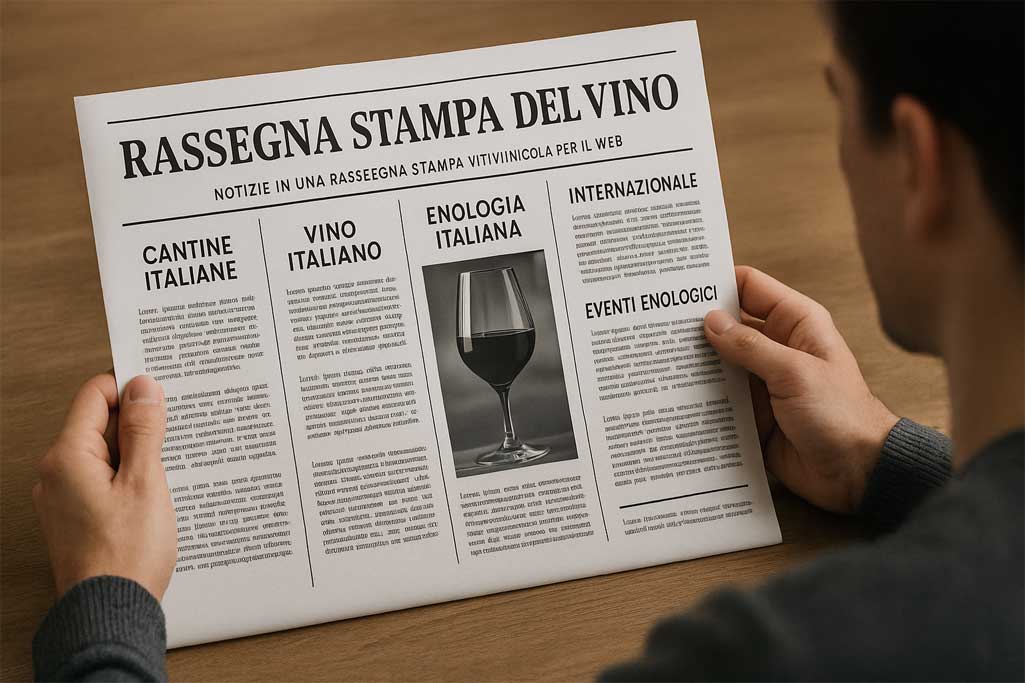
A network portal of Wine Idea. Discover the world of Wine idea

Wine Report of September 13, 2025

cellars, wines and general trends in Italian wine.

Wine Report of September 13, 2025

Italian wineries

  • Strategic Moves – Several cooperatives and family businesses are rethinking their business models in light of declining consumption and price pressures. There is a growing focus on diversification, with expansion into hospitality and experiential tourism.
  • New memberships in protection consortia – Wineries from Oltrepò and Campania aim to strengthen their collective identity, taking a cue from historic clubs (such as Buttafuoco Storico) that have successfully built shared value.
  • Sustainability Investments – Projects related to renewable energy and regenerative agriculture are starting to impact budgets: no longer “ethical choices” but competitive levers.

Italian wines

  • Sparkling wines increasingly central – Bubbles confirm their resilience, both in large-scale retail trade and in exports: many regions are experimenting with native grape varieties.
  • Minor Grape Varieties Being Rediscovered – From Pallagrello Nero to Magliocco, the desire to differentiate oneself on international markets by showcasing typicality and territorial narrative is growing.
  • Awards – Italy consolidates its presence in the 2026 guides (Slow Wine, Gambero Rosso forthcoming), with a particular focus on Sardinia, Calabria, and emerging areas of the South.

Trend of Italian wine

  • Exports in precarious balance – Following ISTAT data for the first half of the year (-0.4% in value, -3.1% in volume), consortium analyses indicate that the second half of the year will be crucial in determining whether exports will hold up in 2025.
  • Domestic consumption – The domestic market continues to show contractions in volumes, partially offset by the slight increase in values (inflation and premiumization effects).
  • Key markets – USA and Canada remain in positive territory; Europe struggles with Germany and the UK, Asia slows; Russia declines sharply.
  • Industry Reflection – More and more voices, from Slow Food to consortia, are calling for the need to reduce overproduction and focus on quality and agroecology.

Summary of September 13, 2025 : Italian wineries are undergoing a reorganization phase, amid economic pressures and the search for new avenues for growth. Native wines and sparkling wines remain the strongest assets, but the challenge remains balancing production, declining domestic consumption, and struggling exports.

Morning Report for September 12 2025

Recent Updates (Italy & Global).

  • Italy aims to regain the top spot in world production in 2025: estimated harvest of 47.4 million hectoliters (Italy), 8% vs. 2024, with vineyards generally in excellent condition, quality ranging from “good to excellent” in many regions.
  • Despite recovering production, the market is suffering from saturation: unsold stocks as of July 31st amount to approximately 39.8 million hl , and fears of oversupply after the harvest.
  • Italian exports in the first six months of 2025: slightly down (-0.4%) compared to the first half of 2024, with a volume of -3.1%. However, the USA and Canada recorded positive performances: Italian exports to the USA increased by 5.2%, and Canada by 12.8%.
  • Some regions show diverging trends: Tuscany is forecasting a double-digit reduction in production (≈ −13%) vs 2024; Veneto is experiencing strong growth (estimated at ~12 million hl, constituting almost 1/4 of national production) supported by favorable conditions.
  • France expects to produce around 37.4 million hl , despite modest increases vs 2024, but remains well below the 5-year average due to heat, drought, and reduced juice content in the grapes.

M&A Radar

Operation / RumorParties involvedValue / size if knownPlaceSource & Date
Italian Wine Group – GIV acquires 100% of Tenuta Rapitalà (Sicily)GIV acquires the remaining shares (10%) that it did not hold in Tenuta Rapitalà (already the majority share since 1999)Value not disclosed; Tenuta Rapitalà owns 176 hectares of organic vineyards in Sicily.Sicily, Italy
Campari sells the Cinzano and Frattina (sparkling/vermouth) brands to Caffo Group 1915Seller: Campari; Buyer: Caffo Group 1915~ €100 millionItaly (national portfolio movement)
Italian Wine Brands Acquires Svinando Wine Club Through Giordano ViniIWB acquires Svinando Wine Club through a subsidiaryUndisclosed amountItaly

Prices & Harvest Mini‑Box

Region / VoiceCurrent situation / available priceTrends (vs week/year) / yields / climate notes
Table grapes / fresh bunchesIn Italy, the wholesale price for fresh black grapes, unspecified varieties, is ~ €4/kg (comparative data 2025).Stable prices compared to recent periods; but high variability by variety/quality; harvest early in many areas; risk of heat and drought in the South (Puglia, Sicily) if a very hot August/September could worsen the situation.
Generic wine grapes (bulk grapes)Current estimated price range between USD 1.19 − 5.46/kg for grapes in Italy (mixed varieties)Slightly downtrend compared to last year in some areas; high inventories exerting pressure; improved yields where irrigation and plant disease management have held up.
Expected yields / harvest volumeItaly: 2025 harvest estimated at ~47.4 million hl; Southern regions 19% vs. 2024; Tuscany −13% vs. 2024; Veneto growing strongly; quality judged to be high overall.Climatic conditions: winter with good water reserves, mild spring; variable summer; some northern regions with problems of bad spring weather; late-season heat can affect acidity/organoleptic balance.

Strategic Observations

  • The global market is very attentive: US tariffs and subsidy/disincentive policies (e.g., the dismantling of vineyards in France) are factors that impact not only quantities/prices, but also market strategies, positioning, and investments.
  • The issue of high inventories (stocks) is a real risk: coordination in trade, targeted promotion, and possible forward agreements are needed to limit the risk of price erosion.
  • Quality as a competitive lever: excellent harvests offer opportunities for differentiation, to promote premium wines and strong denominations, but marketing must “storytell” effectively, even for new/distant markets.

Post ideas for professionals

  1. Title: “47.4 million hectoliters: how to transform 2025 abundance into added value without lowering prices” Corner: operational strategies to avoid the oversupply effect: forward contracts, partnerships with foreign bottlers, product diversification (premium / specialty), careful yield management, investing in branding and storytelling for high-margin segments.
  2. Title: “Italian Exports: USA & Canada Holding Firm, Europe and Asia Creaking – Which Alternative Markets Can Protect Ourselves from Tariffs?” Focus: In-depth country data, assessment of emerging markets with competitive gaps (e.g., South America, Africa, Southeast Asia), possible bilateral agreements, how to differentiate channels (online, HoReCa, retail), and institutional promotion policies.
  3. Title: “Niche M&A in Wine: Focusing on Territories, Organic Sustainability, and Brands with Strong Identity” Focus: Recent cases such as Rapitalà (organic, Sicily), strategies of groups like GIV, and Caffo’s acquisition of Cinzano/Frattina; assessing how these examples can serve as models for small/medium-sized wineries preparing for consolidation.

Wine Trends in Italy – Week 8-12 September 2025

The 2025 harvest promises to be one of the best in decades: an estimated 47.4 million hectoliters, 8% more than 2024.


Healthy grapes, excellent quality and peaks of excellence in many areas confirm Italy’s primacy in world production, ahead of France (37.4 million hl) and Spain (36.8 million hl).

The picture emerges from the joint survey by Assoenologi, Uiv, Ismea and Masaf , which returns a positive profile from a production point of view, but with important issues to be resolved on the consumption and market fronts.

A quality harvest, but a struggling market

Experts like Attilio Scienza emphasize the positive impact of the climate: the summer heat followed by August rains ensured optimal phenolic and aromatic ripening in almost all regions. Excellent signs were seen in Franciacorta, Oltrepò, Valpolicella, Prosecco, Friuli, and Marche; Tuscany saw a decline due to a deliberate decision to reduce yields.
But if production is smiling, high inventories, US duties, a wiped out Russian market, a drop in youth consumption and WHO campaigns are worrying.

Wine prices and value

“It’s absurd that a bottle of water costs €2.40 and a Chianti €3.60,” observes Riccardo Cotarella (Assoenologi) , calling for the urgent need to give greater value to the product . Lamberto Frescobaldi (UIV) also reiterates the need to reduce the quantities released on the market to preserve the value of Italian wine.

International markets: USA in crisis, Canada and Mexico on the rise

The US market is suffering severely: declining consumption, 15% tariffs, and new regulatory uncertainties. In response, Vinitaly is strengthening its presence with the wine2wine Business Forum (Chicago, October 5-6) and opening new routes to Canada, Mexico, and Central Asia . Opportunities are emerging from the Kazakhstan Roadshow , with over 475 operators involved and great interest in Italian wines.

Young people, sports and alcohol consumption

Surprising data comes from a study by the Liguria Local Health Authority (ASL3): young athletes consume 20-30% more alcohol than their sedentary peers. This phenomenon worsens with age, also linked to the presence of alcohol lobbyists in sports , and raises alarm about the future of responsible drinking.

Training and new wine professions

On the job market front, the Sant’Anna School of Advanced Studies in Pisa is launching the 11th edition of the Master’s Degree in Italian Wines and World Markets , a program of excellence that opens doors to roles in marketing, communications, export, and wine tourism. Approximately 70% of graduates find employment upon completion of their internship.

Final summary

In September 2025, Italian wine is experiencing a paradox: record-breaking quantity and quality, and struggling markets and consumption . The challenge will be to promote the product , contain yields, innovate communication for new generations, and find alternative international outlets . Italy remains the world leader, but the future will depend on the sector’s ability to transform this extraordinary harvest into a lasting competitive advantage.

Italian Wine Sector and Opportunities for Young Farmers (Update – August 2025)

Italian Wine Sector and Opportunities for Young Farmers (Update – August 2025)

  1. Overview of the Italian Wine Sector

In 2024, global wine production amounted to 226 million hectoliters, down 4.8% compared to 2023. Italy proved to be a bright exception: production increased by 15.1%, confirming the country as the world’s leading producer. Domestic consumption remained stable (around 37.8 liters per capita), while the rest of the world recorded a 3.3% decline. Internationally, Italy ranked first in exports by volume (21.7 million hectoliters) and second by value (€8.1 billion), behind France. Sparkling wine exports stood out (+9.1% in 2024).

Prospects for 2025 remain positive: leading Italian producers expect overall sales to grow by +1.7% and exports by +2%, with particular optimism for sparkling wines. There is, however, more caution for still wines (+0.9%). Veneto continues to lead in both production volume and exports (over 35% of Italian exports), followed by Apulia (16.1% of volume), and Piedmont and Tuscany, which account for only 4–5% of production volume but double the value thanks to premium wines. Sales in Friuli and Abruzzo grew by 8.2% and 7.5% respectively in 2024.

The business structure remains strongly family-oriented: 65% of companies’ net assets are held by families, a share that rises to 81.5% when cooperatives are included. The main concerns for operators are the expected decline in consumption (70% of companies), the reshaping of demand influenced by health-conscious trends, possible U.S. tariffs, and climate change.

For those wishing to start a new wine business, these figures show a sector that is stable and still growing in international markets, but which requires innovation, risk management, and strategic vision.

  1. Incentives for the Establishment of Young Farmers

The new Common Agricultural Policy (CAP) 2023–2027 includes intervention SRE01 “Establishment of Young Farmers” to encourage generational renewal. The scheme, active in several regions, provides a non-repayable grant for those becoming owners or legal representatives of a farm.

Lombardy

  • Budget: €20 million.
  • Applications: January 17, 2025 – January 15, 2026.
  • Beneficiaries: young farmers (aged 18–40) taking over as owners of an individual farm or as legal representatives of partnerships, corporations, or cooperatives. At least 50% of the farm’s land must be located in Lombardy.
  • Grant amount: one-off contribution in two installments: €50,000 in disadvantaged mountain areas and €40,000 elsewhere. Beneficiaries must prove that at least 50% of the grant will be invested in business expansion, land or building purchases, renovations, machinery, or services.
  • Requirements: over 18 but under 41; professional skills; not established for more than 24 months; commitment to directly manage the business for at least five years; establishment cannot result from family subdivision.

Emilia-Romagna
The 2025 regional scheme includes two complementary measures:

  • SRE01 – First Establishment: encourages entry into farming with a €60,000 grant for areas with natural constraints and €50,000 for other areas. The grant is non-repayable and may be complemented by specific investments.
  • SRD01 – Productive Investments: supports the purchase of machinery, renovations, and modernization, covering 50% of eligible costs (minimum €10,000/€20,000; maximum €750,000). Requires submission of a Business Development Plan (BDP) detailing market analysis, commercial strategy, investments, and training.
  • Eligibility: young farmers up to 40 years old, with professional skills, registered with INPS agricultural management, and owners or managers of companies.

Other Regions
The SRE01 scheme is available in several Italian regions with similar amounts (€50,000–60,000). For instance, the Autonomous Province of Bolzano (South Tyrol) and Lazio offer comparable grants, while Veneto’s program provides higher aid rates for young farmers.

  1. Calls for Investments in Wineries and Modernization

In addition to establishment grants, wine entrepreneurs can access specific programs for winery modernization and competitiveness.

Wine CMO – Investments (Lombardy and Veneto)
The National Strategic Plan includes biennial calls under the “Investments” measure. For example, in 2025 Lombardy launched a €7.3 million scheme funding the purchase of:

  • Barrels and barriques for DOC/DOCG wine aging;
  • Equipment for processing and marketing, including plant components;
  • Laboratory instruments for analysis and quality control;
  • Retail outlet setups and IT tools for business and e-commerce management.

Aid intensity for farms is 40% of eligible expenses, with a maximum of €200,000 and a minimum of €15,000. For processing and marketing companies, rates vary from 30% to 10% depending on size, with eligible expenses up to €700,000. Applications for the 2026/2027 period had to be submitted by May 31, 2025.

Wine CMO – Investments (Emilia-Romagna)
The 2025/2026 call funds construction or renovation of buildings, purchase of machinery, furnishings for retail points, e-commerce sites, and dedicated software. Aid intensity: 40% for micro, small, and medium enterprises; 20% for intermediate; 19% for large companies. Applications require registration in the AGREA IT system and submission of building permits by November 14, 2025.

  1. Support for Wine Tourism and Diversification

Wine tourism is a strategic development channel for wineries, adding value, fostering consumer loyalty, and diversifying revenues. Regional calls support this type of tourism.

Lazio – Promotion of Wine and Olive Oil Tourism
In February 2025 Lazio launched a €400,000 call, split equally between wine and olive oil tourism. The grant is non-repayable and covers up to 80% of eligible expenses, with maximums of:

  • €15,000 for farms with more than 10 hectares or wineries producing over 15,000 liters of wine;
  • €10,000 for smaller farms;
  • €15,000 for protection consortia.

Eligible projects include market analysis, marketing, territorial promotion (guided tours, tastings), digital promotion (SEO/SEM, e-commerce, social media), staff training, and experiential tourism. Applications had to be submitted via PEC by March 7, 2025.

Trentino – Farm Diversification (SRD03)
The Autonomous Province of Trento funds agritourism and wine tourism through intervention SRD03. In 2025, €3.87 million of public expenditure was allocated. Grants are capital-based and fall under the de minimis regime (max €300,000 in three years). Aid intensity:

  • 30% for purchase of movable goods and software;
  • 40% for real estate and plant investments; for young farmers, rates rise to 40% (movables) and 50% (immovables);
  • Eligible expenses range from €30,000 to €500,000, reduced to €100,000 if the entrepreneur is over 65.

Eligible operations include investments in agritourism/wine tourism, social farming, and processing facilities not included in Annex I of the TFEU. Equipment for tastings already covered by the Wine CMO is excluded.

  1. Practical Advice for Young Wine Entrepreneurs

For those dreaming of starting their own winery or wine tourism venture, opportunities abound. Here are some recommendations based on over forty years of experience in the sector:

  1. Develop a concrete business plan. A well-structured Business Development Plan is essential for accessing SRE01 and SRD01 schemes. It should describe the market, commercial strategy, production cycle, planned investments, and required skills.
  2. Evaluate location carefully. Establishment grants are higher in mountain or constrained areas (up to €60,000). Choosing suited but less saturated territories may provide competitive advantages and greater public aid.
  3. Invest in sustainability and digitalization. Calls reward projects enhancing environmental sustainability and advanced technologies. Eligible costs include winery management software or setting up e-commerce platforms.
  4. Integrate production and hospitality. Wine tourism is expanding, highlighting local history and identity. With regional grants (e.g., Lazio or SRD03 in Trentino), it is possible to create guided tours, events, and experiential routes.
  5. Work with professionals. Success depends on technical expertise (agronomists, oenologists), legal and fiscal skills, and modern technologies. Coordinating these professionals like a director ensures efficiency and maximizes funding opportunities.
  6. Plan for growth. Wine CMO “Investments” allow wineries to modernize, purchase machinery, and set up retail outlets. It is advisable to phase investments, using establishment grants first and then expansion funding.

Conclusion

In 2025, the Italian wine sector presents both strengths and challenges: on one side, increasing production, solid exports, and leadership in sparkling wines; on the other, the need for innovation and to address declining domestic consumption. Young entrepreneurs entering this world can count on a wide range of financial tools: establishment grants, winery investment programs, wine tourism funding, and diversification schemes. With strategic vision, careful planning, and the support of experienced partners, it is possible to turn a passion for wine into a sustainable and successful business project.

Style Selector
Select the layout
Choose the theme
Preset colors
No Preset
Select the pattern