A network portal of Wine Idea. Discover the world of Wine idea

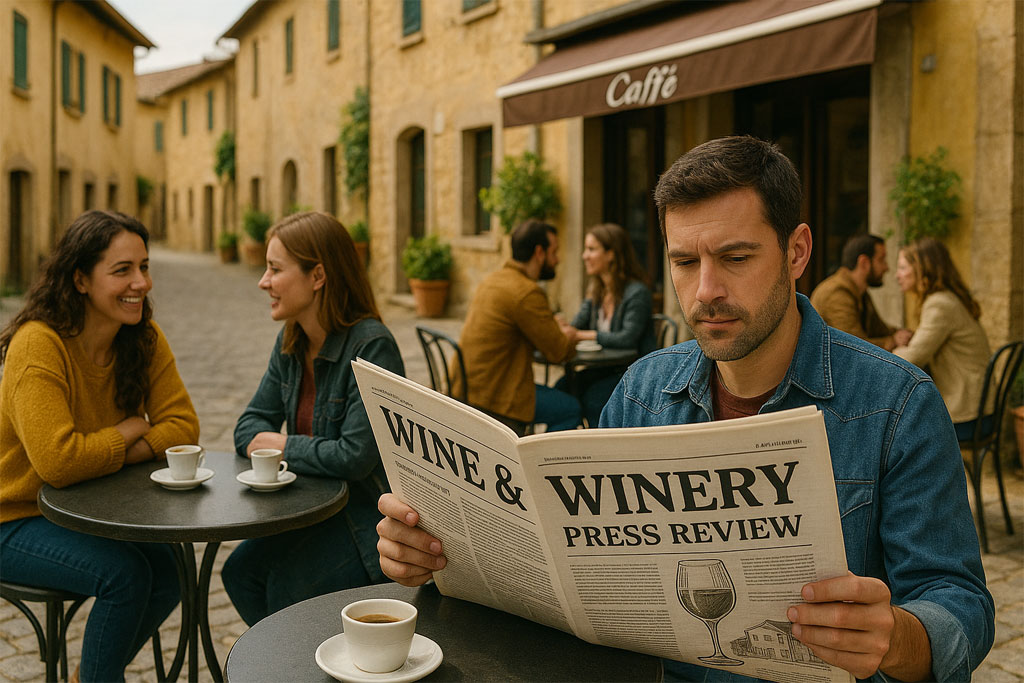
Wine press review for Sunday February 15 -2026

Wineries, Italian wine producers, and wine news.

Italian wineries

Gaja’s Barbaresco Sorì Tildin 2022 named best Italian red according to Gentleman 2026. The Gentleman ranking, a cross-reference between Italian guides and international critics, crowns Gaja. Giacosa, Antinori, and Sassicaia also make the podium: an authoritative snapshot of Italian excellence around the world.

Bosio (AL): a fine white wine under €15 between Piedmont and Liguria. Caplana showcases a family-run, distinctive border viticulture, amidst white clay and sea breezes. A coherent, local project with an excellent quality/price ratio.

Cantina Ca’Stelle (Castelvenere) Thirty years in business, ongoing generational transition, and a strong push towards communication and sales, maintaining a solid production style for Falanghina and Camaiola.

I Cacciagalli in Teano (CE) A biodynamic project combining viticulture and hospitality, on the slopes of the extinct Roccamonfina volcano. Wines that tell the story of the land.

Moncaro at auction: vineyards, cellars, and a restaurant. The Terre Cortesi Moncaro cooperative is up for sale: three cellars, approximately 100 hectares of DOC vineyards, and 52 labels. Estimated value over €13 million. A strategic move attracting groups and investors.

Italian wine and Italian oenology

Longevity and wine: a glass a day, especially between the ages of 40 and 65. Professor Giovanni Scapagnini rehabilitates conscious consumption: benefits on stress, sociality and quality of life.

Veronelli to the “Corriere”: 130 praises for wine. A hundred years after his birth, Gino Veronelli’s cultural legacy remains central: wine as an expression of ethics, agriculture, and humanity.

Italian wine 2025: DOC and DOCG growth, micro-denominations suffer. Valoritalia data: bottlings down 2.1%, but DOC and DOCG down 1%. Significant decline for IGTs. Lower volume, better positioning.

Five groups bottle 18% of the denominations . Concentration in certified Italian wine is growing. The sector is holding up, but undergoing changes in its structure and governance.

Tuscan wine: lower volumes, higher quality. Millennials are driving the trend. Volumes will decline slightly between 2021 and 2025, but purchases will increase by 24% among the 35-45 age group. A shift toward “less but better.”

Wine no longer stands upright. The container changes, and so does consumption: from the bottle to the bag-in-box. This isn’t the end of wine, but a cultural shift.

International

US alcohol market: wine down 3.5%, ready-to-drinks soar. In the United States, wine declines slightly, while RTDs are growing double-digitly. Spirits and beer remain dominant.

Lucanian wine on its way to Switzerland. The Basilicata Region is launching a structured promotion project in Switzerland: internationalization as an economic and territorial lever.

Primum Familiae Vini: the quiet strength of family businesses. Twelve great historic families of global wine united by a long-term vision. In Paris, over 2,800 years of history under one roof.

Wine events

Wine Paris conquers the world (and Italy) . Over 1,350 Italian exhibitors. Qualified buyers, effective organization, and a growing importance in the global calendar.

Prosecco DOC and the Olympics: an €8 million investment. The largest promotional effort ever undertaken by an Italian wine consortium. The goal: to capture the imagination of young people.

WinePrime Milano: the new high-end wine fair. Debuting in January 2027. Milan as an international hub for high-end wine. Luca Cuzziol speaks.

Previews of Tuscany 2026 – Vino Nobile di Montepulciano The 2023 vintage was judged positive, with balanced and refined wines. The 2022 Reserves are still too few to fully evaluate.

4.5 stars for Vino Nobile di Montepulciano 2023. High rating for structure, balance, and finesse. Analysis presented by winemaker Lorenzo Landi.

DiVinNosiola: a journey into the heart of Trentino Vino Santo. From March 28th to April 12th, masterclasses, tastings, and the pressing ritual. Sixteenth edition.

Luca Maroni’s Best Italian Wines (Rome) From February 20th to 22nd, unlimited tastings, workshops, and a focus on alcohol-free and sparkling wines. 25th edition.

Umbria del Vino 2026: the winning wineries have been announced. Twenty years of companies have been awarded in the regional competition promoted by the Umbria Chamber of Commerce.

The best wine list in Europe is Italian. Trattoria al Cacciatore – La Subida in Cormòns has been awarded: “Best Long List” and “Special Jury Prize”.

Thanks for listening. Today’s wine press review is brought to you by WINEIDEA.IT . See you tomorrow.

Wine press review for Saturday February 14 – 2026

Wineries, Italian wine producers, and wine news.

Italian wineries

Temporary Wine by Andrea Moser (Alto Adige) A project outside the box born in Mazzon (Caldaro) that rewrites the story of Alto Adige Pinot Bianco. “Fly,” a 100% Pinot Bianco produced in just 1,280 bottles, has been named one of the 50 Rare Wines in the 2026 Italian Wines Guide with a score of 96/100. This result confirms the career trajectory of a winemaker who has already been a key player at Cantina di Caldaro and at Franz Haas.

Colline Novaresi: Davide Carlone’s dream. A mosaic of vineyards amidst woods, dry stone walls, and natural parks, with Monte Rosa in the background. A project that unites landscape, heroic viticulture, and territorial identity, transforming the hillside into a cultural as well as agricultural attraction.

Brunello “A Diletta” – Col di Lamo Wine and music meet in the story of Gianna Neri and her daughter. A Brunello that symbolizes resilience and female continuity, with the 2019 vintage expressing elegance, complexity, and technical precision.

Umbria del Vino: 20 wineries win. The fifth edition of the national wine competition promoted by the Umbria Chamber of Commerce has concluded. Twenty wineries were recognized for their quality and identity, confirming the region’s increasingly structured winemaking scene.

Emilia-Romagna awarded in Brussels Fifteen regional wineries were recognized at the Concours Mondial de Bruxelles 2025. This result strengthens the region’s international standing, capable of expressing diverse styles and territories under a common qualitative denominator.

Italian wine and Italian oenology

2025 Harvest: Less Wine, More Problems. Production stable at 44.3 million hectoliters, but inventories rising to 61 million (68 million including must). The paradox of a system no longer able to absorb even ordinary production. The UIV’s warning points to a structural, not a cyclical, crisis.

Falling prices and rising stocks . Despite the reduction in yields, quotas aren’t enough. Surpluses of common wines and IGT white wines are growing, while PDO wines are holding up better. Financial pressure on wineries will become the real issue for 2026.

Tuscany: Less Volume, More Value. A clear strategy emerged at the PrimaAnteprima in Florence: focus on quality and identity. Ninety-seven percent of the vineyards are PDO. Exports are slightly up in volume but declining in value, interpreted as a readjustment after record years. On the domestic market, the region is holding its position better than the national average.

EVO oil, like wine, is changing the narrative of Made in Italy: extra virgin olive oil follows the path already blazed by wine, from commodity to cultural product. Territory, supply chain, research, and storytelling become levers of value.

Water Management in the Winery Water as a Critical Process Factor: Timely Measurement, Sensors, Optimization of Washing Cycles, and Wastewater Management are at the Center of New Strategies for Operational Efficiency and Sustainability.

Young people and alcohol consumption: Ferrara’s alarm bells ring. University students are already drinking Spritz in the morning: data on youth addiction is growing. This issue is raising questions about responsibility, communication, and new consumption patterns.

International

Mercosur, the post-2027 CAP, and wine. In Strasbourg, the European Parliament unanimously voted on the new support framework for the wine sector (625 votes in favor). This is a strong political signal, but the system remains fragile amid trade liberalization, transition, and generational change.

Zorah Winery, Armenia A new chapter in Armenian viticulture with ancient roots and an Italian soul. Zorik Gharibian’s project combines historical memory and contemporary vision, putting Armenia back on the map of quality wine.

Italy and France: the art of living through wine. The cultural dialogue between two superpowers of taste is strengthened at Wine Paris, between territory, aesthetics, and UNESCO heritage. Wine as a common language of identity and cultural industry.

Wine events

Zero-alcohol cocktails in Cortina d’Ampezzo. Bartenders at top hotels are once again experimenting with zero-alcohol mixology using Castagner products. A clear signal: the out-of-home experience is evolving and embracing sports, wellness, and new consumption styles.

Irresistible PIWI – Lazise, April 26–27, 2026. The third edition of the event dedicated to resistant varieties. Not just a tasting, but a discussion on sustainability, research, and the future of viticulture.

The best bottles for Valentine’s Day From reds to whites to sparkling wines: a selection of iconic labels to celebrate the occasion, with a focus on Alto Adige and Pinot Bianco.

Thanks for listening. Today’s wine press review was brought to you by WINEIDEA.IT .

See you tomorrow.

Wine press review for Friday February 13 -2026

Wineries, Italian wine producers, and wine news.

Italian wineries

A winery in a 16th-century quarry: a €10 million project in Manduria. A new wine citadel is being built in the heart of Puglia, nestled in a 16th-century tuff quarry. The project, spearheaded by entrepreneur Luigi Blasi, calls for a futuristic winery nestled within a 130-hectare estate, with an estimated employment impact of dozens. This operation combines historic restoration, territorial development, and an industrial vision.

Cantina dell’Arte: Vivallis celebrates Depero in Rovereto. The Vivallis Winery in Nogaredo dedicates a permanent room to Fortunato Depero, merging art, territory, and wine. The initiative strengthens the winery’s cultural positioning and highlights the Depero Bianco and Rosso wines as expressions of the Vallagarina’s identity.

Italian wine and Italian oenology

“Yes!” Prosecco DOC: Italian sparkling wines conquer France. In the homeland of Champagne, Prosecco DOC consolidates its position: France becomes the world’s third-largest market. In 2025, 667 million bottles were declared (1.1%), with over 82% destined for export to over 160 countries. At Wine Paris, the Consortium was a key player with 34 companies.

The Gentleman ranking crowns Gaja’s Barbaresco Sorì Tildin 2022 as the best Italian red wine . Giacosa, Antinori, and Sassicaia also make the podium: a collective tale of Italian excellence according to international critics.

Over 60 million hectoliters in the cellar: the inventory issue. At Wine Paris, Lamberto Frescobaldi (UIV) reports the most significant data: inventories are at an all-time high, the market is slowing, and bulk wine is struggling. The “Italian winery” is growing, but its value is struggling to keep pace with volumes.

Tuscany’s wine industry holds its own on the markets. With €1.2 billion in exports (15% of the national total), Tuscany looks ahead with confidence, despite recording a 2.7% decline in labeling and bottling in 2025. The shared awareness: a change of pace in communication is needed, especially for the great reds.

Vino Nobile di Montepulciano soars abroad. In 2025, 64.5% of sales will be on international markets. With a total value approaching one billion euros, Nobile confirms its position as an economic pillar and regional ambassador, ahead of the 2026 Preview.

Guaranteed PGI | “Post-Natural” Wine After decades of debate, the concept of natural wine is evolving. A “post-ideological” phase is emerging, where method, transparency, and consistency are key, overcoming the rigid distinction between natural and conventional.

Prosecco DOCG: trucks removed from the UNESCO hills. The Ecolog project aims to reduce traffic and smog by up to 40% by moving logistics hubs outside of Valdobbiadene and introducing electric vehicles. This is a key step towards sustainability and landscape protection.

International

French wine exports plummet: down 8% in value in 2025. According to FEVS, France has hit a 25-year low. The United States, China, and the euro/dollar exchange rate are weighing on exports. Champagne also grew in volume but lost more than 4% in value, a sign of pressure on margins.

Krug Vintage 2013: A Surprising Vintage Presented in Milan, Krug ‘s first 2013 vintage stands out for its freshness and acidic tension. A sign of how climate and style are redefining even the great maisons.

Wine, Mercosur, and the post-2027 CAP: Europe accelerates. The European Parliament overwhelmingly approves the new support framework for the wine sector. The message is clear: the crisis is structural and requires new tools for the market, protection, and transition.

The Wine Package is now law: what’s changing? The definitions for “0.0%,” “alcohol-free,” and “reduced alcohol” wines have been approved. This is a crucial step for a rapidly growing no/low alcohol category, which now gains regulatory clarity.

Wine events

Wine Paris 2026: Italy Takes Center Stage CEO Rodolphe Lameyse announces a unique pavilion dedicated to Italy for 2027. With 6,500 exhibitors from 63 countries, Wine Paris consolidates its position as a global wine hub.

Southern Roots: Registration is now open for the 21st edition. From June 3 to 8, 2026, in Gioia del Colle, the event celebrates Southern Italian wines and oils with competitions, B2Bs, tours, and historic vertical tastings of native grape varieties.

From Paris to Tokyo: the Area39 model at the top of fairs At Wine Paris, Area39 designs the largest single-management space in Italy, involving over 160 entities in an integrated B2B hub.

Spazio Vignaiolo at Hospitality 2026 In Riva del Garda, 80 FIVI wineries will enliven the area dedicated to wine tourism and experiential hospitality, with tastings, seminars, and Slow Food cuisine.

Franciacorta takes center stage in Paris Between Wine Paris and an evening on the Seine, the Franciacorta Consortium strengthens its international positioning, bringing the Italian Metodo Classico to the iconic locations of the City of Light.

Thanks for listening. Today’s wine press review is brought to you by WINEIDEA.IT . See you tomorrow.

BIOFACH – “The World of Organic Agriculture 2026″

FederBio: European organic consumption peaks at nearly €59 billion, with Italy leading the way in UAA and organic producers.

Surface areas substantially unchanged while consumption of organic food is growing in Europe and globally, reaching an all-time high.

This is the picture that emerges from the report ” The World of Organic Agriculture 2026 “, relating to 2024, just presented at Biofach by the Organic Agriculture Research Institute FiBL in collaboration with IFOAM , the Federation of Global Organic Associations.

According to the analysis, organic land in Europe remains stable at 19.6 million hectares. Of this, 18.1 million hectares are concentrated in the EU, where organic farming represents 11.1% of total agricultural area, compared to 3.9% for the entire continent.

Among the countries with the largest organic land areas, Spain stands out with nearly 2.9 million hectares, followed by France with 2.7 million hectares, and Italy, which ranks third with 2.5 million hectares . However, it leads in terms of organic UAA, which exceeds 20%, almost double the European average. Italy also maintains its leadership position in terms of the number of organic producers, with over 87,042 operators out of the 490,637 active in Europe as a whole.

Retail sales of organic products in Europe are significant, reaching a record €58.7 billion in 2024 (an increase of 4.1%), a trend that reinforces consumers’ growing focus on healthier and more sustainable consumption choices.

In 2024, Germany remained Europe’s largest organic market (€17.0 billion), followed by France (€12.2 billion) and Italy (€5.2 billion). Switzerland, meanwhile, recorded the highest per capita consumption in the world, at €481 per person.

Globally, according to analyses in ” The World of Organic Agriculture 2026 ,” organic agricultural area remained essentially stable at 99 million hectares in 2024, while global retail sales of organic food and beverages reached €145 billion. The United States remains the largest market with €60.4 billion, followed by Germany with €17 billion and China with €15.5 billion.

“European analyses provide us with a clear picture: citizens are increasingly shifting their food choices toward organic,” says Maria Grazia Mammuccini, President of FederBio . “The significant finding is that, for the first time in 2024, the percentage growth in consumption exceeded the percentage growth in organic farmland. However, the increase in organic sales must go hand in hand with an increase in production. This is why we must not slow down the objectives of the Green Deal: EU strategies supporting agroecological development, combined with significant investments in research and innovation, are key to growing the sector. The paradox is clear: while citizens are choosing sustainability, Brussels is holding back. Instead, we must resolutely move forward towards a resilient agriculture and food system that respects ecosystems. It’s not just about the environment, climate, and health, but about the real economy: the future of our agricultural businesses and that of future generations is at stake.”

Style Selector
Select the layout
Choose the theme
Preset colors
No Preset
Select the pattern