A network portal of Wine Idea. Discover the world of Wine idea

AN INTENSE AND PROFITABLE 2024 CLOSES FOR THE ALTA LANGA CONSORTIUM

455 hectares of vineyards, 14 new associated producers bringing the group to 85 and an expected growth in sales of over 10%.

SAVE THE DATE : March 10, 2025 The First of the Alta Langa in Turin.

2024 was a year of growth for the Alta Langa Consortium, which strengthened its role in the Italian sparkling wine scene. A rich agenda of events and collaborations consolidated the positioning of the Alta Langa as a symbol of quality, innovation and tradition.

The most important moments of 2024

  • January : The Consortium opened the year with a tasting bench at Grandi Langhe in Turin, an ideal opportunity to consolidate relationships with professionals and operators in the sector.
  • February : The volume “Alta Langa: the story of a denomination” was presented to members, an in-depth study dedicated to the history and characteristics of the classic method Alta Langa DOCG.
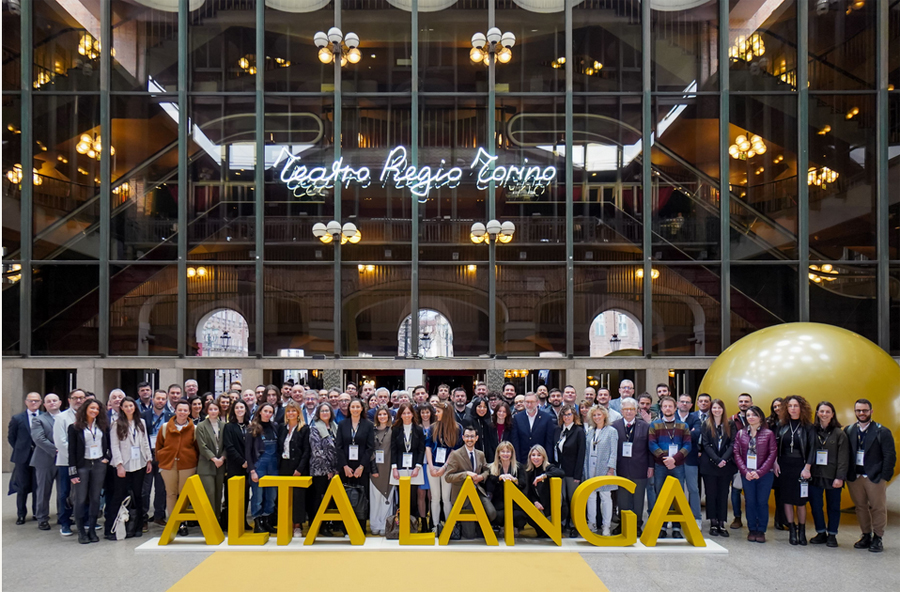
  • March : The sixth edition of La Prima dell’Alta Langa, at the Teatro Regio in Turin, saw an extraordinary participation of Horeca operators and the press. During the event, the oenologist Donato Lanati led two masterclasses on long refinements.
  • April : During the Milan Design Week, Alta Langa was the protagonist alongside Italdesign for the launch of the “Asso di Picche” prototype, an example of how Piedmontese savoir faire can combine design and taste.
  • Spring : The Consortium toasted at important events such as Vinum Alba and the twentieth anniversary of the University of Gastronomic Sciences of Pollenzo.
  • June : Alta Langa Roma, the great tasting event at Palazzo Brancaccio, was the highlight of the month, bringing the denomination to Rome with 30 producers. Among the June events, also Rose and Rosé in Bossolasco, which celebrated the territory through a refined meeting between nature and tradition. At the end of the month, the Consortium received the Ancalau “Lavoro & Ambiente” Award in Bosia, recognition for its commitment to the progress of the territory. Technical training meetings in the oenological and viticultural fields for the Consortium members have begun.
  • September : Alta Langa DOCG participated in Abruzzo in Bolla and Terra Madre, where a dedicated corner allowed people to discover the high-quality Piedmontese bubbles. The two annual stages of “Alta Langa DOCG: Soul of a Territory”, the format created by the Consortium for the Horeca world, took place in Bologna and Florence. Furthermore, the Consortium toasted the New Year of the Alba White Truffle on the night of September 30, for the start of the hunting season in Piedmont.
  • October, November and December : Alta Langa DOCG accompanied prestigious events such as the inauguration of the Opera and Ballet Season of the Teatro Regio in Turin, the Alba International White Truffle Fair and Buonissima Torino. Among the novelties of the year, the launch of the distinctive “Alta Langa Frappeuse”, created in exclusive collaboration with Italdesign.

A positive balance and a look to the future

2024 closes with significant results: 455 hectares of vineyards, 14 new associated producers that bring the group to 85 and an expected growth in sales of over 10%. A year that combined innovation and valorization of traditions, confirming the role of Alta Langa DOCG as a symbol of sparkling wine excellence at a national level.

The First of Alta Langa 2025

The date chosen for the annual event of the Alta Langa Consortium is Monday, March 10, 2025, in Turin . It will be the seventh edition of the great tasting of all the cuvées on the market of the Consortium members. In January, registrations for the Horeca public and for journalists will open on the institutional website.

The goals achieved this year – underlines the president Mariacristina Castellettaare the result of a shared commitment: producers, partners and an ever-increasing number of supporters and enthusiasts who accompany us in taking the Alta Langa DOCG further and further, without ever losing sight of our values and our identity ”.

THE ALTA LANGA CONSORTIUM

The Alta Langa Consortium was founded in 2001, after many years of in-depth, methodical and documented research and studies on the area’s vocation. It brings together passionate and far-sighted winemakers and producers who, driven by great Piedmontese pride, founded and grew this young denomination but with deep roots that sink into history and the territory. The great challenge that unites everyone is to produce a necessarily important wine, which will not be ready for six years after the vineyards are planted.

To date, the Consortium has more than 80 sparkling wine producers and 90 associated winemakers.

Since 2022, the president of the Consortium is Mariacristina Castelletta , the vice-president is Giovanni Carlo Bussi .

The Consortium boasts a long-standing partnership with the International Alba White Truffle Fair , of which it is the Main Sponsor and the Alta Langa DOCG Official Sparkling Wine , and with the Slow Food world, in particular with the Wine Bank and the University of Gastronomic Sciences of Pollenzo ;   The Consortium is also a technical partner of the Teatro Regio in Turin .

ALTA LANGA DOCG

Alta Langa DOCG has the honour of representing the first classic method in Italy, born in Piedmont in the mid-1800s .

The denomination obtained the DOC in 2002 and the maximum qualitative recognition of the DOCG in 2011, today it has a production of over three million bottles.

Alta Langa Docg is made with Pinot Noir and Chardonnay grapes, pure or mixed in variable percentages; it can be white or rosé, brut or pas dosé and has very long aging times on the yeasts, as required by the strict regulations: at least 30 months. The distinctive feature of Alta Langa is that it is an exclusively vintage sparkling wine, that is, the fruit of a single harvest: each bottle always has the year of the grape harvest on the label, inextricably linked to the particular characteristics of that specific harvest. It is produced in a hilly area (over 250 meters above sea level) that encompasses the provinces of Asti, Cuneo and Alessandria: a land that looks at the snow-capped peaks of the Alps and breathes the sea and that collects the legacy preserved by our ancestors, kept intact for a long time without undergoing radical transformations, as instead happened in the lower hills. The Alta Langa is a precious territory, to be supported, where biodiversity is safeguarded. A literary land, an extraordinary land of resistance – of wars and cultures -, which has faced changes and supported them without losing its baggage of memories and its strong identity.

Alta Langa obtained the DOC in 2002 and the DOCG in 2011
CONSORZIO BARBERA D’ASTI E VINI DEL MONFERRATO: 2024, A YEAR OF SUCCESS AND INTERNATIONAL PROMOTION

The Barbera d’Asti e Vini del Monferrato Consortium is preparing to conclude an extraordinary 2024, animated by a busy calendar of events that has brought the Monferrato wine excellences to Italy and the world.

An intense and milestone-rich year comes to a close for the Barbera d’Asti e Vini del Monferrato Consortium , which in 2024 brought the winemaking excellence of Monferrato to new levels of visibility and appreciation, both in Italy and abroad. With a calendar of events that combined promotion, culture and tasting, the Consortium consolidated the role of Barbera d’Asti and its denominations as a symbol of quality and authenticity. The flagship of its activities was the first edition of the Barbera D’Asti Wine Festival , held in Asti in September, which involved wine enthusiasts, industry professionals and personalities from the world of culture and art. Famous personalities from the world of literature, wine and music such as the writer Stefania Auci, journalists and critics such as: Jeff Porter, Aldo Fiordelli, Veronika Crecelius, Othmar Kiem and the singer-songwriter Giorgio Conte told their stories and their vision of the world of wine with a particular focus on Barbera and the territories of Monferrato.

This first edition of the Barbera D’Asti Wine Festival represented an unmissable opportunity to exalt and give the right importance to Barbera, the emblem of our territorial identity ,” declared Vitaliano Maccario, president of the Consortium . “ We will certainly propose this event again next year, which aims to make this grape variety increasingly famous and to become a point of reference for experts and wine lovers eager to taste the best Barberas.

2024 saw the Consortium as a protagonist not only at a national level, but in some of the most important markets in the world, through participation in top-level events, including the Barbera Fish Festival in Oslo, which, in March, celebrated the tenth anniversary of a historic union between Barbera and cod with walk-around tastings and two masterclasses. In the same period, Holland and Belgium hosted, with great success, Monferrato Identity , during which hundreds of operators and enthusiasts were able to discover the excellence of the territory. Not only Europe but also the United States and Canada saw Barbera and the wines of Monferrato as protagonists of a rich calendar of targeted tastings that attracted buyers, restaurateurs and wine lovers, consolidating their presence on the American markets.

The response from international markets has been exceptional, ” added Vitaliano Maccario, “ We have demonstrated that our wines are perfect ambassadors of Monferrato, thanks to their quality and their unique history. ” There were also many activities to discover the territory aimed at the Italian and foreign press, among which stand out: Falstaff, Jeff Porter and Stevie Kim. Illustrious names and magazines who were able to experience and discover the Monferrato territory and its wines. Great attention was also paid to the fairs in Italy, Salone del Vino in Turin, Vinitaly in Verona and Vinoforum in Rome, which saw a strong turnout at the Consortium stand, confirming the ever-growing interest of operators and the public in Monferrato wines. Not only big events but also the promotion of Barbera and the territory took place throughout the year through glamorous moments dedicated to wine lovers such as the Milan Wine Week and Golosaria . “ 2024 represented a fundamental stage for Barbera d’Asti and the wines of Monferrato, consolidating the role of the Consortium .” concluded Vitaliano MaccarioThe results achieved have opened up new opportunities on international markets and strengthened dialogue with the public, laying the foundations for an even more promising future .”

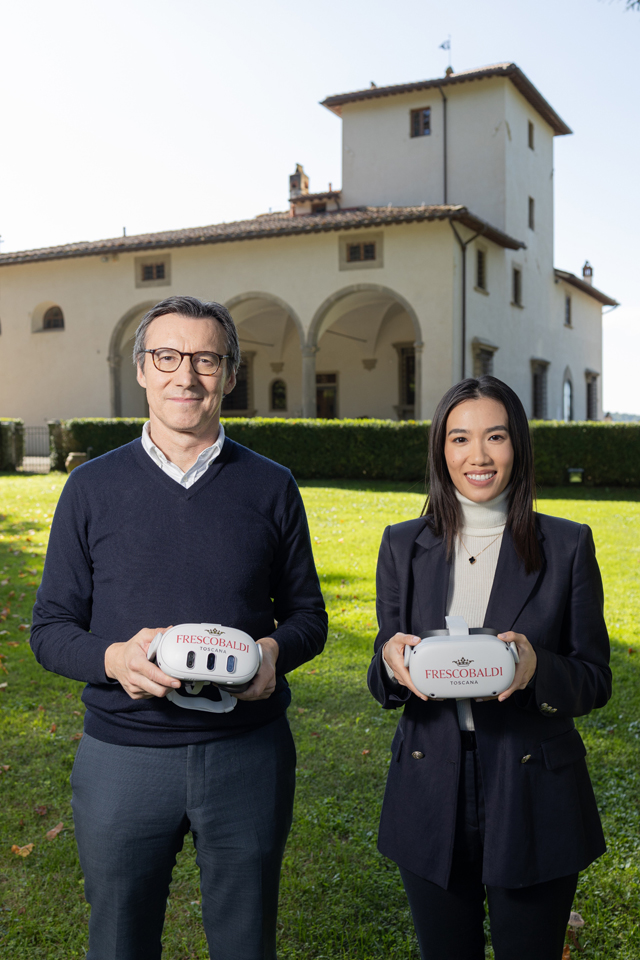
Marchesi Frescobaldi presents the new Augmented Reality experience

Frescobaldi continues its digital expansion journey, as the Tuscan company transforms its wine labels into an interactive experience.

Frescobaldi presents the new Augmented Reality experience based on Artificial Intelligence and Machine Learning.

The strong bond with its roots motivates Frescobaldi to always look further ahead, aiming to tell in a revolutionary way its wonderful estates and a 700-year long history of winemaking heritage with continuous investments in cutting-edge digital realities.

Innovation and tradition meet in Frescobaldi’s new Augmented Reality project, developed in collaboration with AQuest , Creative Production & Technology Company, a partner of Ogilvy. With this project, Frescobaldi has chosen to let the labels of its wines speak for the first time, offering an interactive and immersive experience. Thanks to artificial intelligence, the system is able to recognize the labels and activate a real digital gate . This will allow consumers to embark on a journey to discover the Frescobaldi estates and its unique wines, delving into the production process and the history that characterizes each bottle.

By simply scanning a QR Code on the back label of the bottle, consumers will be able to explore the Tuscan landscapes, discover the history of the Estates and learn more about the characteristics of each wine, including information on climate, winemaking, maturation and organoleptic notes. Fabrizio Dosi, CEO of the Frescobaldi Group , says: “This project opens up new scenarios for the integration between Artificial Intelligence and winemaking tradition, two worlds that have never been so close, giving our consumers memorable experiences”.

“In addition to representing a powerful business tool for the sales team,” continues Dosi , “the project also has an important educational value , allowing our consumers to gain a thorough understanding of the history and peculiarities of Frescobaldi wines.”

Frescobaldi’s AR project , which began in 2019, is constantly evolving. Starting with 360° videos accessible with VR viewers and arriving today with a complete Augmented Reality experience, accessible directly from mobile devices. As a demonstration of its versatility, this tool has been used in multiple contexts, from commercial presentations and international fairs, to exclusive events and corporate training. As Van Hong Doan, E-Commerce & Digital Manager of Frescobaldi , adds: “Using advanced algorithms and machine learning models, Artificial Intelligence has made it possible to digitize over 50 labels, making each bottle a gateway to a unique immersive experience.”

MARQUIS FRESCOBALDI

The Group, owned by the Frescobaldi family, boasts seven centuries of history and 1,500 hectares of vineyards. The mission of Marchesi Frescobaldi is to understand and promote unique terroirs, ensuring

that become an integral part of the spirit of Tuscany. The family’s thousand-year history constitutes a unique and irreplaceable treasure of knowledge and traditions. Frescobaldi embodies the very essence of Tuscany, its extraordinary aptitude for viticulture and the fascinating variety of its growing areas.

The nine Marchesi Frescobaldi estates are: Castello Pomino (Pomino), Castello Nipozzano (Nipozzano), Tenuta Perano (Gaiole in Chianti), Tenuta Castiglioni (Montespertoli), Tenuta CastelGiocondo (Montalcino), Tenuta Ammiraglia (Magliano in Tuscany), Remole (Sieci), Tenuta Calimaia (Montepulciano) and Gorgona . Located in areas of Tuscany particularly suited to the production of fine wines (DOC, DOCG and IGT), the estates differ in terrain, environment and history. To these should be added the Bolgheri Ornellaia and Masseto estates, Tenuta Luce in Montalcino, Domaine Roy & Fils in Oregon and Attems in Collio.

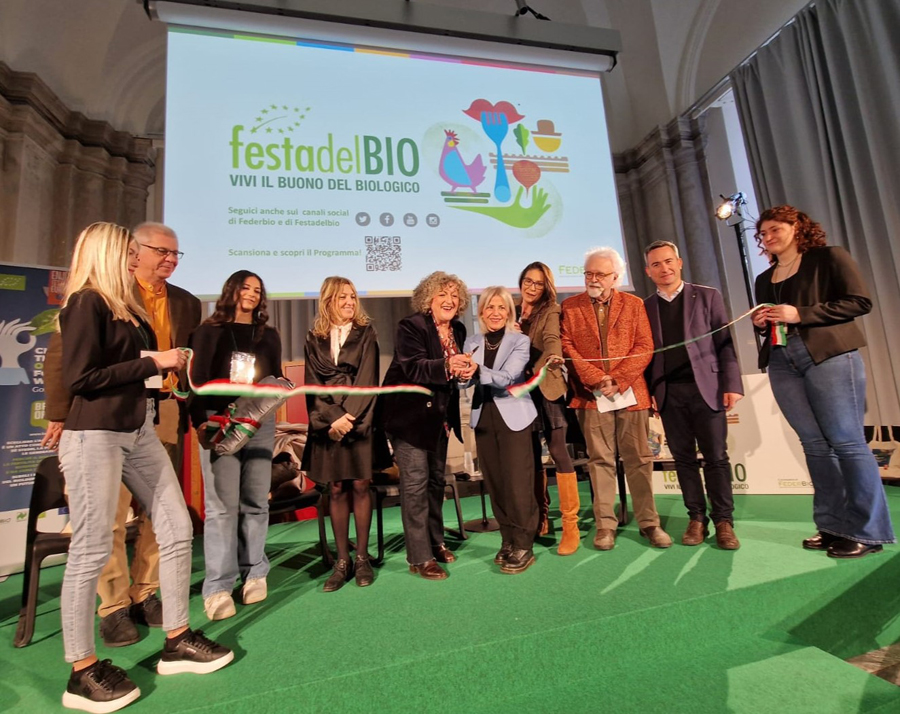
Milan celebrates organic: a concrete response for climate, agriculture and food and makes an appointment for the next stage of the Festa del BIO in March in Rome

Promoted as part of the Being Organic in EU project, managed by FederBio in collaboration with Naturland and co-financed by the European Union, the benchmark event for Italian organic products highlighted the importance of conscious food choices for the health of people and natural habitats.

The thematic talks, workshops, showcooking and the contest “GOOD. IT’S ORGANIC!” aroused great interest.

Food choices play a crucial role in people’s health, the protection of environmental ecosystems and the mitigation of climate change. This is the message launched by the Milanese stage of the seventh edition of the Festa del BIO, which underlined the value of organic as a key element in building a sustainable future; a virtuous model, essential for preserving natural resources for the benefit of future generations.

During the day of discussion between experts, researchers, nutritionists and farmers on the future of agriculture and food, the fundamental role of the agroecological transition, of which organic and biodynamic represent the peaks of excellence, clearly emerged. At the Festa del BIO, the importance of food education was underlined to promote more conscious choices, encouraging the consumption of local foods, the reduction of meat and the fight against food waste.

“The rapid evolution of the climate crisis confirms the need and urgency of a radical change in the agricultural model and food choices – highlighted Maria Grazia Mammuccini, President of FederBio – According to the data recently presented by Nomisma, many of our country’s productions have suffered production drops that in several cases exceed 30%, especially in the center and south, due to the climate crisis. We no longer have time. To protect our agricultural productions, we must act immediately and accelerate the transition to agroecology to achieve the objectives of the Green Deal even more quickly, which aim to reach 25% of organic cultivated surface area in the EU by 2030. To change the production model, however, it is essential to also change the way we consume, which is why we believe it is essential to raise awareness among citizens and make them understand that when we choose a food we also choose the method with which it is grown. There is a collective responsibility that concerns on the one hand farmers, who must act more and more towards sustainability also through conversion to organic, on the other citizens, who must make conscious choices towards food produced in respect of Nature and people’s health. Aiming for the lowest price involves a compromise of workers’ rights, the reduction of farmers’ income, effectively opening up to undeclared work. Environmental sustainability is not in conflict with economic and social sustainability, on the contrary everything is part of a coherent and integrated process”.

“The introduction of food education in schools is fundamental for us,” said Barbara Nappini, President of Slow Food Italy. “I often compare our food system to a plate with an invisible “beam” inside it. This metaphor represents an unjust paradigm that combines environmental degradation, waste and hunger, contributing to increasing the gap between the North and the South of the world. It is urgent to change the model and recognize the value of agriculture integrated with ecosystems: for us the way forward is organic and agroecology. To build a more equitable and sustainable future, it is extremely important to raise awareness among new generations about the link between food, the environment and social justice. According to the ISMEA report, out of 100 euros spent on fresh products, only 7 end up with the farmer, while for processed products this figure drops to 1.5 euros. This data highlights a deep crisis, but at the same time offers an opportunity: to think of a new production model, because the intensive one is now at the end of the line. The problem is global, but it can be addressed through the three pillars of economic, social and environmental sustainability, and with good, clean and fair agronomic approaches such as organic”.

“In our annual report “Stop pesticides on the plate” – added Stefano Ciafani , President of Legambiente – it clearly emerges how too many samples of conventional fruit and vegetables continue to present more pesticide residues and we denounce the lack of legislation to set legal limits on the co-presence of multiple active ingredients, an essential measure to guarantee greater food safety and health protection. Italy, which is among the international leaders in the organic sector, must protect this heritage and its rigorous and more transparent standard compared to those of various international productions, which in some ways create unfair competition for Italian products. Together with FederBio and Slow Food Italia we work to promote clear, transparent and informed information on these issues, also countering the ideological propaganda that attempts to discredit the Green Deal and its decarbonization actions, of which the main beneficiaries are precisely the farmers who are among the first victims of the climate crisis”.

“In Italy, the agricultural surfaces dedicated to organic are growing, supported by policies that encourage the agroecological transition, with more evident results in small and medium-sized companies – underlined Nicoletta Maffini , President of AssoBio – However, in large companies, located especially in Piedmont, Lombardy and Veneto, organic farming is not yet sufficiently widespread. However, the main point concerns consumption: in our country there is still a skepticism linked to controls, which makes clearer and more effective communication on the benefits of organic essential. Organic farming represents a concrete response that respects and regenerates the land, harshly exploited in previous decades by intensive agriculture, which has caused serious environmental damage. Today, with climate change increasingly putting the agricultural sector in crisis, organic is confirmed as the indispensable choice for the future. However, it is essential to review VAT, a product that protects health and the environment, such as organic, deserves a tax break. Everyone’s commitment is needed to achieve this goal”.

Style Selector
Select the layout
Choose the theme
Preset colors
No Preset
Select the pattern