A network portal of Wine Idea. Discover the world of Wine idea

MTV UMBRIA PRESENTS OPEN WINERIES 2025: 44 WINERIES READY TO WELCOME VISITORS

A weekend among vineyards, tastings, exclusive experiences and solidarity in the green heart of Italy on Saturday 24th and Sunday 25th May, bookable on the Umbria Wine Tourism Movement Portal.

With the participation of 44 member wineries, this edition of Cantine Aperte promises to be an ideal journey capable of reflecting the winemaking excellence of the Umbrian territory: Saturday 24 and Sunday 25 May 2025 is once again the moment of the most anticipated wine tourism event of the year, organized by the Movimento Turismo del Vino Umbria , this year reaching its 32nd edition.

Sensory itineraries, vertical tastings, lunches in the vineyard with local gastronomic specialties, picnics among the rows and outdoor activities; and more: guided tours with exclusive tastings, e-bike tours to discover the Umbrian hills, dinners with winemakers under the stars and live music. There are many original proposals from Umbrian wineries, which will open their doors to wine tourists to allow you to discover the secrets behind every glass of wine. Each winery will offer a unique and diversified program, designed to enhance not only the wine but also the typical Umbrian products.

Cantine Aperte represents a special moment for our territory – underlines Giovanni Dubini , President of the Umbria Wine Tourism Movement – an opportunity to share the passion for wine and the love for Umbria. By getting to the heart of the activities of the 44 cellars, visitors will be able to get to know our winemaking tradition and the hospitality of our producers. MTV Umbria has always promoted tasting not only as a tasting experience, but as a conscious experience that contributes to responsible and satisfying consumption, in the name of quality, capable of reflecting the cultural identity of a territorial community “.

Testimony of this attention to social responsibility and awareness on important issues is the renewed collaboration of Cantine Aperte with Fondazione AIRC per la Ricerca sul Cancro ETS, Charity Partner of the event. With each tasting kit, visitors will donate 6 euros to AIRC, thus supporting scientific research against cancer. The kit includes a tasting, a glass and a glass holder, which can be used throughout the day in the participating wineries.

I would like to thank President Dubini and the entire Umbria Wine Tourism Movement for their constant support that has allowed us to raise over 350,000 euros over the years. Funds that have contributed to the financing of innovative research projects – explains Laura Radi , President of the Umbria Fondazione AIRC Committee -. This year we will also be present in the participating wineries with specific materials to raise public awareness of the conscious consumption of alcohol and to promote prevention through some simple behaviors: healthy eating, regular physical activity and above all, stopping smoking ”.

Reservations to participate in tastings and guided tours are already open on the official portal of the Umbria Wine Tourism Movement. For more information on the event and the winery programs, you can visit the official website at mtvumbria.it/cantine-aperte-2025.

The Open Cellars are only those of the Movimento Turismo del Vino, which by regulation guarantee quality of hospitality in the cellar, education in conscious drinking and safety. Therefore, wine lovers are invited to participate in the event only in the MTV Umbria member cellars listed.

For this edition of Cantine Aperte the Umbria Wine Tourism Movement is supported by Ciclovery, Enoidee and Belbo Sugheri.

TALOSA: 6 ENGAGING WINE EXPERIENCES IN THE HEART OF MONTEPULCIANO

6 ENGAGING WINE EXPERIENCES SUITABLE FOR PROFESSIONALS, WINE CURIOSITIES AND ENTHUSIASTS IN THE ENCHANTMENT OF THE HISTORIC CENTRE OF MONTEPULCIANO.

In the heart of the rolling Tuscan hills, where the landscape unfolds between rows of vines, solitary cypresses and ancient stone farmhouses, stands Talosa , a winery that embodies the history, beauty and passion of Montepulciano. Here, the union between nature and tradition gives life to authentic experiences, designed for those who wish to immerse themselves in the purest essence of Vino Nobile di Montepulciano.

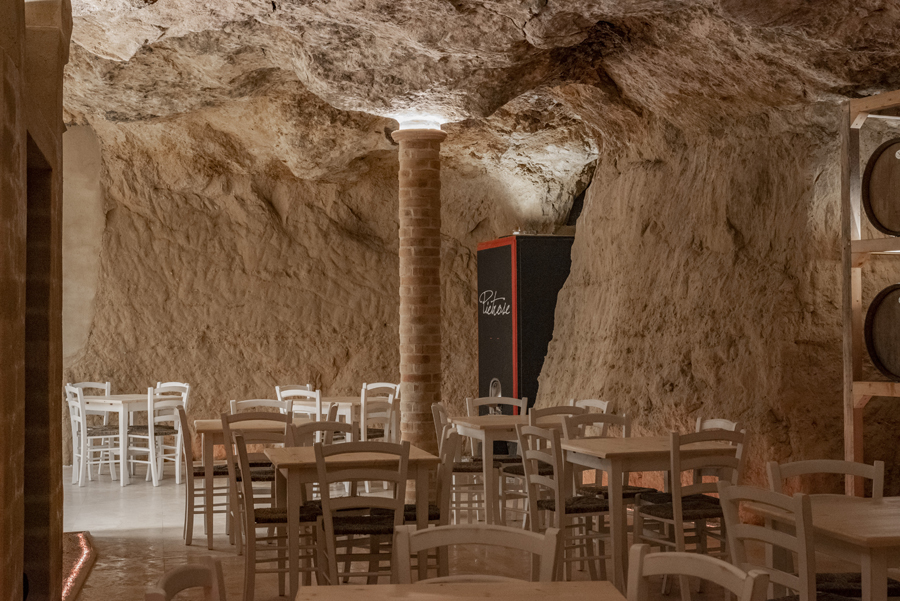
Talosa has always placed hospitality at the center of its philosophy , enhancing the territory and creating wine tourism itineraries in harmony with the wonderful context that surrounds it. A commitment that led to the inauguration of the Cantina Storica, after meticulous renovation work carried out in collaboration with the Fine Arts. In this evocative underground space, among oak barrels and centuries-old brick vaults, the wine rests and matures, guarding the soul of Montepulciano. The tasting room created from a former storage area, transformed into a welcoming and refined environment, is ideal for an immersive sensory experience. Even more unique is the underground tasting room, located 15 meters below ground level and reachable via a staircase that starts directly from the Cantina Storica. Once an air raid shelter , today it is an evocative space dug into the rock , perfect for experiencing exciting and engaging wine experiences .

In 2019, Talosa’s tradition of hospitality was enriched with the restoration of Villa Talosa , an elegant country residence immersed in the vineyards, just two kilometers from the historic center of Montepulciano. The villa represents an oasis of relaxation for lovers of wine and Tuscan beauty, offering an exclusive stay with a panoramic swimming pool, a hot tub and refined spaces for up to eight guests. Exclusively for the villa’s guests, Talosa offers a guided tour to discover the entire production cycle of Vino Nobile di Montepulciano.

To experience a unique immersion in the world of wine, Talosa also offers its visitors a journey of taste, through a wide range of Wine Experience itineraries , each designed to satisfy the needs of the curious, enthusiasts and true connoisseurs. TASTE OF TALOSA : a first encounter with the winemaking tradition; TASTE OF LIGHT LUNCH : an experience that combines wine and typical Tuscan flavours; TASTE OF LUNCH : a journey through wine, gastronomy and culture; TASTE OF TALOSA LUNCH PLUS : the pleasure of wine accompanied by a complete menu; TASTE OF PIETROSE LUNCH : exclusive tasting with a special selection; TASTE OF PIETROSE LUNCH PLUS : a refined food and wine experience.

Each formula includes a guided tour of the Talosa Historic Winery, a tasting of the winery’s best wines (Nobile di Montepulciano Docg, Nobile di Montepulciano Riserva Docg, Nobile di Montepulciano “Filai Lunghi” Docg; IGT “Pietrose” Super Tuscan; IGT “Pietrose” Bianco; “Pietrose” Brut Rose Spumante Metodo Classico), and delicious gastronomic pairings with typical Tuscan products , such as Pienza pecorino cheese, local cold cuts and traditional dishes.

EXCLUSIVE NEWS: THE PIEVE LE GRAZIE DI TALOSA

In some of our experiences, it is also possible to taste La Pieve Le Grazie di Talosa , a prestigious label that represents the most authentic and territorial soul of the winery. This wine comes from the historic Chiusino vineyard, planted in 1969, one of the oldest in the Montepulciano area. Situated in a privileged position, this vineyard expresses all the strength of tradition and the deep bond with the terroir. La Pieve Le Grazie is a wine of rare elegance, which combines complexity, balance and an intense aromatic expression: a tasting that becomes emotion, a hymn to the history and future of Vino Nobile.

Talosa invites wine lovers to discover the true spirit of Montepulciano, a place where every glass tells a story and every experience turns into an indelible memory.

The cost of the Wine Experiences varies approximately between 30.00 and 80.00 euros.

The WINE MACHINES Museum opens to the public tomorrow

first corporate museum to join the public network of Siena museums.

In Valdichiana , the Tuscan capital of Culture 2025, a stone’s throw from Montepulciano , a pearl of the Renaissance, in an extraordinary landscape, a natural oasis among vineyards as far as the eye can see, oak woods and olive groves, on May 17 , with the cutting of an unusual and symbolic ribbon made from a vine shoot, LE MACCHINE DEL VINO , the Carpineto company museum, was inaugurated. A small cross-section of almost two centuries of oenology brought together by a winemaker who has dedicated and dedicates his entire life to making wine and has lived the most dynamic sixty years in the history of wine in Tuscany.

THE WINE MACHINES , the collection of CARPINETO Grandi Vini di Toscana, a company registered in the National Register of Historic Brands, was conceived and brought together by the co-founder of the Tuscan company among the most famous names in Italian wine, Antonio Mario Zaccheo, who has gathered here testimonies preserved, sought and collected over the years, emblems of an entire life dedicated to agriculture and wine in particular. From the museum to the vineyard and vice versa, wine tells its story.

LE MACCHINE DEL VINO is a one-of-a-kind private collection that tells the story and evolution of machines for producing and preserving wine and, through these, the reality of two families who have dedicated themselves with passion to this land.

We are happy that it is the first corporate museum to join the Fondazione Musei Senesi network and we gladly welcome it precisely for its ability to tell a story that starts from the territory, from the community that lives there and from typical production activities. This entry confirms once again how FMS is a network open to welcoming those significant entities that want to tell and enhance the material and immaterial heritage of the lands of Siena and its communities” – underlines Alessandro Ricceri , president of Fondazione Musei Senesi.

“I am honored that my collection has become part of the Foundation and very happy to give a small contribution to a region that among its most precious assets includes a very prestigious wine production” – says Antonio Mario Zaccheo who also wants to underline the non-exhaustive and evolving nature of this collection that will continue to be enriched with new pieces.

“LE MACCHINE DEL VINO is located in the original place of the collection and production and represents not only a document of the history and tradition of a precious artisan work such as that of the winemaker, but it is also an expression of its continuity between past and present and of the changes, and above all of our deep bond with the territory”, continues Zaccheo who wanted to ideally represent here the beginning and end of the production process , from the vineyard to the bottle.

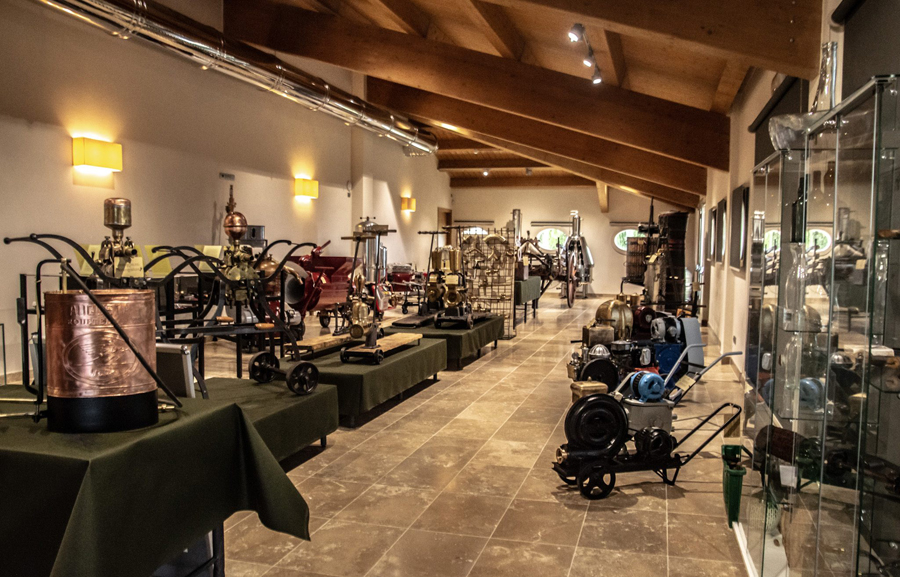
The collection in fact includes machines, tools, objects, documents, photographs, texts that offer a cross-section of the evolution of winemaking machines from the very first cellars through the ferment of the 60s of the last century to the turning point of the 80s: it begins with the work in the vineyard, then in the cellar and arrives at the habits and customs at the table through trade and exchanges.

All seen through the eyes, the passion, the knowledge of a man who began as a child (next to his grandfather and then to his father already winemakers) to make wine, continued with his friend and partner Giovanni Carlo Sacchet with whom in 1967 he founded the Tuscan company that then became over the years one of the excellences of Italian wine, and still continues to do so. A man whose life summarizes over 60 years of wine history, from the pioneering beginnings to the prestige of today.

The collection has a total of over 180 objects including wine-making machines and work objects . In addition, there is a small personal library with volumes, magazines, guides and period photographs.

Coming into more detail to some mini exhibition sections: there is the viticulture section with even horseshoes and a hoe and the many types of pruning shears almost to cut out the profile of a “wine tailoring shop”.

The wine section with the pumps, the first collected here are from the end of the 19th century, they are balance pumps operated by two people, passing through those that are part of the mechanical evolution that begins at the beginning of the 20th century. In the same area, filters, presses, presses, scales.

And again, sparkling wine making machines, a very first bottling machine, a labelling machine.

The reconstruction of an oenologist’s laboratory is intriguing, with over 30 objects including scales, ampoules, microscopes, a refrigerating column, tasting glass, etc. collected from various wine analysis laboratories and dating back to the end of the nineteenth century. Some of these, especially the glassware, are still in use: pipettes, flasks, burettes, graduated cylinders.

Manual immersion thermometers for monitoring fermentation temperatures, an early example of an electronic thermometer.

Among the curiosities are a Malligand , an instrument that measured the percentage of alcohol, an acidometer for determining the acidity, volatile, and then pipettes, and graduated cylinders that were used to compose the cuts between the various wines and test them on a small scale before making them. And again, small precision scales, capable of measuring up to the thousandth. A microscope from the end of the 19th century completes the whole.

Among the oldest objects dating back to the late 18th century, two wooden filters and cotton bags that were used to pass the wine through.

The section of caps, cappers and corkscrews displayed by type and evolution is rich.

A collection that represents a new small piece added to the story of wine, a good that has been the heritage of humanity for centuries, and that “belongs to culture, paradoxically we could say more to culture than to nature” to use the words of Tullio Gregory.

The exhibition space is diffusely illuminated both with natural light thanks to the huge windows that open onto the countryside, and with wall lighting; adjacent to the space is a large hall with a wine bar for welcoming visitors and conviviality.

Upstairs, in a charming open-space mezzanine overlooking the barrel cellars, is the technical tasting room with over 30 seats.

Outside, plots of land as far as the eye can see where you can live an immersive experience in a contemporary agricultural reality where precision agriculture is practiced with latest-generation machines and technologies with very low environmental impact.

The collection is in fact located on the Vino Nobile di Montepulciano estate, which lies partly in the municipality of Chianciano Terme and partly in the municipality of Montepulciano, a green oasis powered largely by solar energy in the most beautiful Tuscany . A wine retreat of 180 hectares of land dedicated to vineyards, olive groves and woods, an ideal environment for the game that populates it in its natural state. A cross-section of the most evocative Tuscan landscape, vineyards and more, where close to the vineyards there are also two Etruscan tombs identified by the Superintendence of Archaeological Heritage and not yet excavated.

At the estate, WINE TOURISM is practiced with a wide range of proposals for trekking, tastings, picnics on the grass, open-air lunches, and with specialized staff able to carry out tastings and walks among the rows but also guided tours of the museum . Visits that can be connected to wine experiences or completely autonomous.


BORGO GRADIS’CIUTTA: CHARMING HOSPITALITY AND IDEAL STARTING POINT FOR GO!2025

Gradis’ciutta winery dedicated to Borgo Gradis’ciutta, an elegant structure in Collio. Surrounded by vineyards, the Borgo is the ideal place to experience the initiatives of GO! 2025, European Capital of Culture and to delve into the food and wine, cultural and artistic offerings of the area during this special year.

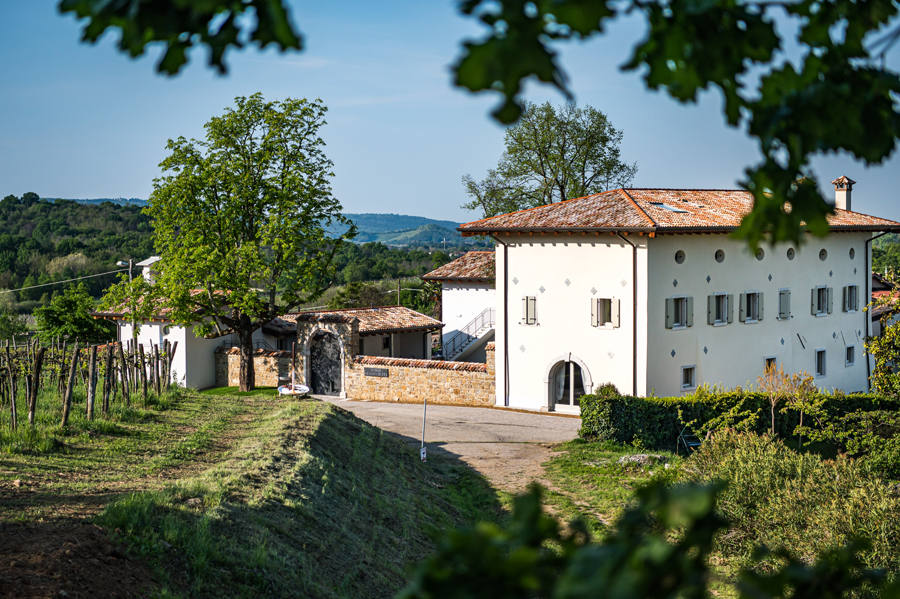
Located on the slopes of Collio at the gates of Gorizia, BorgoGradis’ciutta is a complex of buildings dating back to 1500 , today part of the homonymous agricultural company of Robert Princic, transformed into a structure designed with a hospitality perspective.

In a context where nature, colors, panoramas and sunsets reign unchanged over the centuries, Borgo Gradis’ciutta is the ideal starting point to explore Gorizia and Nova Gorica, together European Capital of Culture 2025, with its events, exhibitions, shows and initiatives that will enliven the area throughout the year.

Just a few minutes from Gorizia, but immersed in the quiet of nature, Borgo Gradis’ciutta offers a refined welcome in a rural village restored with elegance and respect for tradition. The structure surrounded by vineyards that have always been cared for with attention to the ecosystem, and which have given life over time to prestigious organic wines, is elegant, authentic and immersive, with 9 refined rooms restored with taste and respect for local tradition and 3 apartments with independent kitchen.

Every detail reflects the deep bond with the territory: from the furnishings inspired by the culture of the Collio, to the warm hospitality that makes every visitor feel at home. Borgo Gradis’ciutta also offers personalized experiences including tastings of the fine wines of the Gradis’ciutta farm, walks through the vineyards, guided tours to discover the Collio and moments of relaxation in the greenery .

In particular, the experiences are among the most varied: with the possibility of creating a “oneoff” version of Collio Bianco through the “Create your own Collio Bianco” experience. During your stay at the Borgo, you can also enjoy authentic contact with nature through a picnic in the vineyard or try the Nature bathing formula. Space is also reserved for practical and engaging activities such as Cooking Classes to learn more about Central European dishes and culinary traditions. In September, there is also the opportunity to experience first-hand the work in the vineyard by joining the Gradis’ciutta staff during the educational harvest in order to discover the secrets behind the art of creating some of Italy’s most famous wines.

Furthermore, on 24 January 2025, solemnly anticipating the beginning of the extraordinary year of Gorizia and Nova Gorica, European Capital of Culture 2025, one of the four monumental steles created by the master Giorgio Celiberti , an internationally renowned Friulian sculptor, was placed outside the Gradis’ciutta winery.

The inauguration was an intense and meaningful moment: producers Robert Princic and Matja¸ Četrtič had the opportunity to present Sinefinis, a wine project without borders, born from a shared passion for the territory and the desire to break down barriers. Sinefinis is an example of a unique collaboration in the European panorama. This project, which celebrates Ribolla Gialla – Rumena Rebula as a symbolic variety of Collio and Brda, has made it possible to create cross-border bubbles from Italian and Slovenian grapes that tell a story of unity and sharing.

among which the cross-border art project Ars Sine Finibus stands out, which once again unites Italy and Slovenia. Born in collaboration between Galleria MAG of Como, Studio Giorgio Celiberti of Udine and the wineries Gradis’ciutta (GO) and Ferdinand of Kojsko (SLO), it aims to transform the vineyards of Collio and Brda into an open-air museum.

GO! 2025 confirms itself as a unique cultural experience and Borgo Gradis’ciutta is the perfect place to fully experience this magic: between winemaking tradition, scenic beauty and the energy of a territory that looks to the future.

Company profile short

Founded in 1997 by Robert Princic in the heart of Collio, the Gradis’ciutta company now extends over 50 hectares of vineyards located both on the Italian side of Collio and in Slovenia. This dual territorial soul allows the richness and complexity of a unique wine-growing area to be best expressed, through the production of highly identifiable varieties such as Chardonnay, Ribolla Gialla, Malvasia, Friulano and Pinot Grigio. The collaboration between the two sides of the border has given rise to a shared vision and a production that speaks for a cross-border identity, where wines become a symbol of connection between cultures, true bridges that unite rather than borders that separate. At the base of everything, sustainability represents one of the company’s central values: Robert Princic has chosen to adopt organic and conscious viticulture, based on respect for nature, people and the territory, with the aim of creating authentic, elegant wines that are deeply linked to their origins.

Style Selector
Select the layout
Choose the theme
Preset colors
No Preset
Select the pattern