All posts by admin

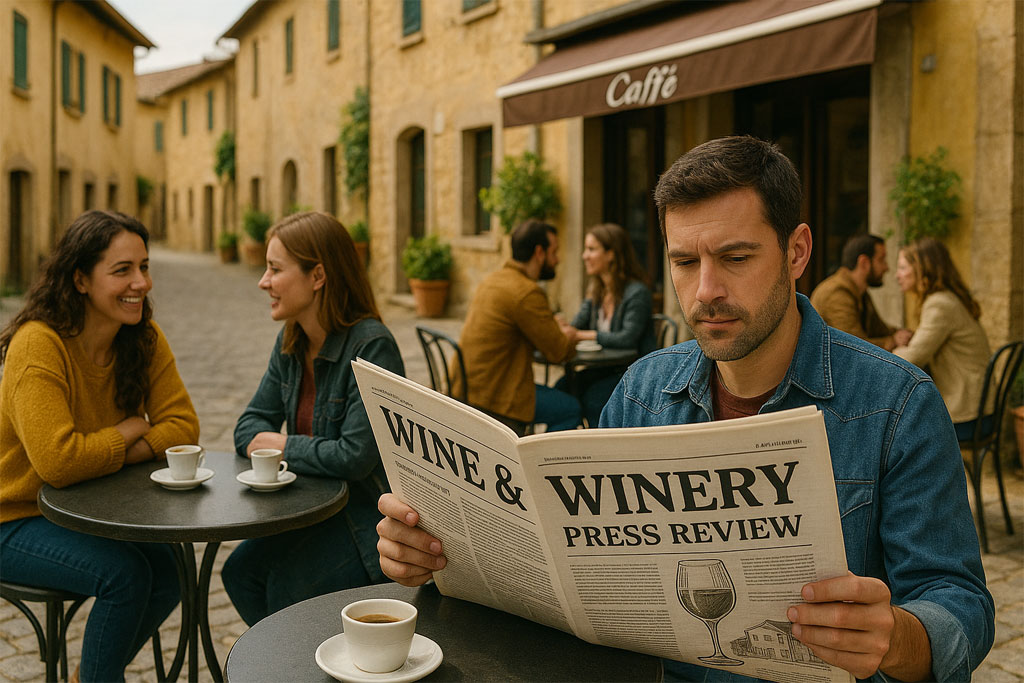
Wine press review for Wednesday February 25 -2026

Wineries, Italian wine producers, and wine news.

Italian wineries

  • Brave Wine, Renzo Rosso’s evolutionary project. The entrepreneur relaunches wine as a long-term industrial project: investments in new companies, including abroad, and a focus on iconic regions. Wine as a cultural and strategic asset, not a hobby.
  • Faretra acquires Querce Bettina in Montalcino. From Maremma to Brunello: a consolidation operation in one of the most iconic regions of Italian high-end winemaking. Limited production, strong exports, and extremely high land values: Montalcino remains a magnet for patient capital.
  • Garofano celebrates 30 years with a new Fiano del Salento. After Negroamaro, the opening to white wines marks a phase of broadening identity and a more nuanced understanding of the territory.
  • Castello di Razzano, Monferrato “Tuscan Style” Vineyards, olive groves, hospitality, and sold-out tours: Monferrato is experimenting with an increasingly experience-oriented, integrated model.
  • Cantina Valpolicella Negrar bids farewell to Daniele Accordini. Over thirty years of cooperative leadership and vision: a generational transition that concludes an important historical phase.
  • Four friends, no vineyard, success in the Castelli Romani. The “Icaro” project demonstrates that, with vision and identity, even new winemakers can build fame and a following.

Italian wine and Italian oenology

  • Growing stocks: UIV calls for production flexibility. Stocks reach 61 million hectoliters (up 6%). The proposal: revise the Consolidated Wine Act to adapt production potential to the market. A key issue for CFOs and winery governance.
  • CAP 2026: Unified application deadline by May 15. Agea deadlines confirmed, along with updates on young farmers and eco-schemes. Administrative planning increasingly crucial.
  • EU Wine Package: Breakthrough for Southern Italy. European approval for measures to rebalance supply and demand, targeted grubbing-up, export support, and regulatory simplification.
  • Chianti Classico Collection 2026 Gran Selezione and Riserva as a territorial manifesto: less power, more identity. The UGAs become a strategic key.
  • Umbria, a “boutique” wine region . 20 wineries awarded: lower volumes, greater recognition. A model that can be replicated for non-industrial areas.
  • Smell as the primary sense of wine. From the Naf – Nose Art Festival, a reflection that unites science, art, and food and wine: wine as a cognitive experience, not just a product.

International

  • The first non-alcoholic Cru Classé Bordeaux is born. From Saint-Émilion comes a 0.0% Merlot for €57. This zero/low-alcohol wine officially enters the premium segment. This is a sign not to be underestimated.
  • Maurizio Martina, candidate for FAO leadership , applauds FederBio’s decision to strengthen Italy’s influence in global agricultural and food policies.

Wine events

  • “Dining with the King of Chefs” in Cocconato d’Asti. From Escoffier to Pollo alla Marengo, Monferrato celebrates history, cuisine, and local identity.
  • Terre di Toscana – 18th edition There’s also room for older vintages: 40 years of regional winemaking history up for tasting.
  • Rebel Queen – Vernaccia di San Gimignano Wine Fest 2026 Edition between historical anniversaries and contemporary languages.
  • Slow Wine Fair 2026 Ten wines to remember at a fair that confirms the centrality of ethics, direct relationships, and the “livability” of wine.
  • City Cellars – Ravenna Over 150 wines for tasting: wine returns to the spotlight in urban spaces.
  • AI in the cellar and in the food industry. In Cremona, SMEs are learning to communicate with algorithms: innovation is becoming part of the daily life of family businesses.
  • Umbria del Vino: 57 wineries competing. The competition is a tool for comparison and growth, rather than for medals.
  • Wine Spectator awards the Casa Italia Wine List – Milano Cortina 2026 Italian viticulture takes center stage on the international Olympic stage.

Thanks for listening. Today’s wine press review was brought to you by WINEIDEA.IT .

See you tomorrow.

VinNatur Tasting 2026

From April 11th to 13th, 180 Italian and European manufacturers will be present at the Margraf showroom in Gambellara. A tasting room for press and industry professionals will be available, along with a new networking area.

The producers of the Association des Vins Libres d’Alsace will also be at the tasting stands.

From Saturday, April 11th to Monday, April 13th , 2026, the 21st VinNatur Tasting , the annual event organized by the VinNatur Association, returns to Gambellara (Vicenza). For three days, the Margraf showroom will host 180 winemakers from six countries—Albania, Austria, France, Germany, Slovenia, and Spain—and 19 Italian regions, united by their commitment to sustainable viticulture.

New to the 2026 edition will be the presence of the Association des Vins Libres d’Alsace , which will participate with a shared tasting table . Founded in 2019, AVLA now has around 60 members and represents a new generation of Alsatian natural wine producers. This year, VinNatur Tasting will also join the celebrations for the centenary of the birth of Luigi Veronelli , journalist, editor, and food and wine writer, commemorating his extraordinary contribution to Italian wine culture and his role as a pioneer of wine criticism.

“Luigi Veronelli made a decisive contribution to redefining the meaning of viticulture in our country: he didn’t just talk about wine, he also defended and gave a voice to winemakers. We recognize him as a clear precursor of the values ​​now considered fundamental in the natural wine sector,” explains Angiolino Maule , President of VinNatur. “That’s why we chose to remember him on this anniversary, drawing attention to what he meant and continues to mean.”

Since its first editions at Villa Favorita, VinNatur Tasting has become a point of reference for enthusiasts, professionals, and those curious about drinking according to nature. This edition will also feature plenty of opportunities for meeting and learning: three masterclasses , Guided by wine experts, they will enrich the event’s program. From 10:00 a.m. to 6:00 p.m. each day, visitors will also be able to meet the winemakers, taste, and purchase wines at the tasting tables. The food area will also be open, featuring selected products from small Italian producers: meats, cured meats, and cheeses, regional specialties, craft beers, coffee, and desserts.

Journalists and industry professionals will be able to access the tasting room , a quiet and private space designed to offer an optimal tasting experience for all the wines featured at the event. Producers and importers will also have the opportunity to meet in the new networking area , dedicated to professional exchanges and building business relationships.
​ ​ ​
Tickets for VinNatur Tasting 2026 will be available for purchase on the event website starting March 1st . The cost is €30 for a one-day ticket and €50 for two days, including a tasting glass. All proceeds will go to fund the association’s research and training projects and to support several charitable initiatives .

VinNatur Tasting in brief
When
: Saturday, April 11, Sunday, April 12, and Monday, April 13, 2026
Where : Margraf Showroom | Via Torri di Confine – Gambellara (Vicenza)
Opening hours to the public : 10:00 am to 6:00 pm
Admission : €30.00 for a day (€50.00 for two days) includes a tasting glass. Tickets can be purchased on-site, at the event entrance (cash, credit card, or debit card), or online. Accompanied minors do not pay admission and are not permitted to participate in tastings. Small pets are permitted.
Useful information for those arriving by train:
A free shuttle bus service will be available to and from the San Bonifacio train station.
– On your return journey, we recommend arriving at the event entrance 30 minutes before your train departs.
Useful information for those arriving by car:
At the Montebello Vicentino toll booth exit (A4 Milan-Venice motorway), turn immediately right towards Verona. The Margraf showroom is on the right, 1.2 km along the SR11. There’s ample parking in front and it’s easily accessible.
Website: www.vinnatur.org/eventi/vinnatur-tasting-2026/

Wine press review for Tuesday February 24 -2026

Wineries, Italian wine producers, and wine news.

Italian wineries

Irpinia, saving the “starseta”: the ancient vineyard as a living heritage. In Irpinia, a group of winemakers is mobilizing to preserve the starseta vineyard , a historic training system that characterizes the landscape of the Taurasi area. Tall, intertwined vines, often planted with fruit trees, tell the story of a complex peasant viticulture, now threatened by abandonment but central to the area’s identity.

Marchesi Frescobaldi presents the new CastelGiocondo vintages. Marchesi Frescobaldi presents the Brunello di Montalcino CastelGiocondo 2021 and the Riserva Vigneto Ripe al Convento 2020: two interpretations that express the variety of Montalcino’s soils and microclimates, with freshness, depth, and ripe tannins.

Cantine Di Marzo, the origins of Greco di Tufo. The history and identity of one of the most iconic families of Greco di Tufo, linked since the 19th century to the exploitation of tuff mines and the definition of one of Southern Italy’s most distinctive white wines.

Orsogna Winery and the International Biodiversity Project The Orsogna Bio Cantina Sociale launches the “Biodiversity in and for the Vineyard” project with the Universities of Eastern Piedmont and Milan: replicable scientific guidelines to demonstrate that production quality and ecosystem protection are allies, not alternatives.

Italian wine and Italian oenology

Piedmont, the Consortia raise the alarm: “Structural and market crisis.” At the Agriculture Commission in Turin, the Consortia spoke of a widespread crisis affecting iconic denominations such as Barolo and Barbaresco, comparable in severity to the 2008 and 2020 phases.

Valpolicella Ripasso DOP: recall due to incomplete labeling. Some batches of Valpolicella Ripasso DOP Superiore Corte della Pieve, bottled by Enoitalia, have been recalled due to the lack of the “contains sulfites” label. The warning was issued by the IN’s Mercato chain.

How to Buy Wine at the Supermarket Without Mistakes: From paying attention to the vintage to storage conditions: expert advice for avoiding disappointing purchases, including real deals and bottles penalized by light and heat.

Viticulture: Downy Mildew, Protection from A to Z Technical focus on the management of downy mildew (Plasmopara viticola), from bud break to pre-harvest, with integrated defense strategies and targeted anti-downy mildew programs.

International and sector policies

EU, new wine reform: more climate resilience and less bureaucracy. The Council of the European Union approves the new regulation reshaping the wine sector: balancing supply and demand, administrative simplification, new rules on labeling, exports, and wine tourism.

Green light for the Wine Package from the Agrifish Council. Production control measures approved, greater coverage against climate risks and new definitions for dealcohol-free and reduced-alcohol wines, with EU contributions of up to 80% for environmental investments.

Tariffs and trade tensions: Italian companies on alert. After the G7 trade summit, Minister Antonio Tajani urges companies to maintain investments in the United States, amid growing demand for stability and the protection of international agreements.

Italian oil: exports grow, but production and margins suffer According to the Mediobanca Research Area, Italy is losing its global production share (6.3%) despite strong export growth (40.7%), squeezed between price volatility and structural deficiencies.

Italian organic market hits record highs in 2025. The organic market will reach €6.9 billion (6.2%), driven by large-scale retail and out-of-home dining. Data presented in Bologna at Sana Food and the Slow Wine Fair.

Wine events and wine culture

Conegliano Valdobbiadene Italian City of Wine 2026/2027 190 events are underway across Conegliano, Valdobbiadene, Pieve di Soligo and other municipalities in the province of Treviso, coordinated by the National Association of Wine Cities.

Luca Maroni’s Best Italian Wines: 25 Years of Tastings In Rome, the historic event celebrates a quarter century with tastings, workshops, and a focus on new trends, from dealcoholized wines to the sparkling wine method.

Slow Wine Fair: “Wine is only good if it’s right.” Slow Food focuses on agricultural work and the ethical supply chain, revitalizing the link between wine quality and respect for people.

Vermouth Show: over 10,000 attendees in Turin. The third edition exceeds expectations and consolidates vermouth as a protagonist of renewed international cultural and commercial interest.

VinNatur Tasting 2026 in Gambellara From April 11 to 13, 180 winemakers from six countries will be present. The Association des Vins Libres d’Alsace will also be present. This edition celebrates Luigi Veronelli’s centenary.

Wine Spectator awards the Gold Medal to the Casa Italia selection, which it calls a celebration of Italy’s winemaking biodiversity.

Lazio wines take center stage at Slow Wine. Twenty-eight regional wineries showcased in Bologna, with the support of the Lazio Region and ARSIAL, to strengthen the region’s quality positioning.

Tastings at Villa Selvatico (Euganean Hills) Sunday, March 1, 2026, tastings of local products and crafts in a historical-naturalistic setting, including picnics, aperitifs, and the culture of taste.

Thanks for listening. Today’s wine press review was brought to you by WINEIDEA.IT . See you tomorrow.

Wine press review for Monday February 23 -2026

Wineries, Italian wine producers, and wine news.

Italian Wineries (histories, territories, projects)

Cantine Di Marzo (Tufo): the origins of Greco di Tufo Historical-territorial story: from the tuff mines to the vocation of Greco in Irpinia, with key passages on DOC (1970), DOCG (1993) and local production identity.

Masseria Campito (Gricignano d’Aversa): focus on Asprinio A coherent and courageous “single-varietal” project: 6 hectares, a farmhouse transformed into a winery (since 2013) and the promotion of Asprinio as a territorial signature.

Ca’ da Roman (Romano d’Ezzelino): the future is PIWI. A strategic bet on resistant grape varieties (PIWI) as a frontier of sustainable viticulture, with the ambition of becoming a European hub dedicated exclusively to these varieties.

Bio Cantina Sociale Orsogna: Biodiversity as a competitive lever Scientific project “Biodiversity in and for the vineyard” with Universities (Eastern Piedmont and Milan): demonstrating that quality, sustainability, and biodiversity can be synergistic (1,500 hectares, 300 members, oases, and fishponds).

Al Bano: the Apulian estate between hospitality, farm and winery Portrait of a property where the agricultural part and wine production (e.g. “Don Carmelo”) are integrated with hospitality/experience elements (spa, small church, woods, horses).

2) Italian wine and Italian oenology (market, styles, techniques, data)

Valoritalia: 2025: A mixed bag for certificates

  • Total certified bottlings: -2.1% vs 2024
  • DOC/DOCG 1% (quality/export locomotive)
  • IGT -12% , reds -13% , exports -3% Reading: sector stabilization, with polarization towards “strong” denominations.

Gen Z USA: Sweet wine as a bridge to dry wines. Insight by Deborah Parker Wong: To attract twenty-somethings, sweet/fruit-forward wines (Amarone, Recioto, Moscato, Vin Santo, but also Prosecco and Lambrusco) can open the door. The goal: a gradual conversion to drier styles.

Alto Adige: Micro-regions and “light” reds under €20 (Schiava & Co.) Focus on sub-zones and company/cooperative specializations; Schiava takes center stage between Santa Maddalena and Lake Caldaro, with more agile and refined styles (and Lagrein as another regional highlight).

“Organic is no longer enough”: the shift toward sustainable viticulture. From “labeled” organic to a more integrated model: protection, soil, machinery, costs, and quality stability in a more unstable climate. Theme: sustainability as a balance between quality, profitability, and impact.

In Brianza, a winemaker “leaves the wine” and brings the method to the fruit. Marco Colzani applies winemaking logic (maturation, acidity, oxidation, tannins) to the production of juices and nectars: an interesting sign of technical contamination and advanced craftsmanship.

Funding: €5.5 million for photovoltaic vineyard renovation/conversion. Regional approval for 2026/2027 with streamlined procedures; in parallel, a 2026 call for proposals for photovoltaic systems on agricultural holdings (dual lever: competitiveness of vineyards and energy transition).

3) International (USA, duties, exports, scenarios)

A year of US tariffs: higher costs, struggling exports, and “hostility.” Summary (Eric Asimov, NYT): The tariffs, designed to “protect” American industry, have primarily created uncertainty and friction; the case of Canada (up to 35%) and reductions in purchases are cited.

New York: The Italian wine merchant who stopped tariffs. Victor Schwartz (VOS Selections)’s story: impact on margins and inventories (-25%), decision to sue, and his role as plaintiff in an appeal supported by the Liberty Justice Center. A case that symbolizes how trade policy affects artisanal imports.

Alta Langa DOCG flies to New York (March 10, 2026) The Consortium’s first official event in the USA, at Eataly Downtown: a B2B meeting with 27 producers, tasting tables, and seminars on the history/territory/distinctiveness of the Piedmontese Classic Method.

4) Wine events (fairs, tastings, awards, calendar)

Slow Wine Fair (Bologna, until February 24): good, clean, and “fair” wine. The Slow Wine Fair Sana Food axis is growing: wine presented as an economic, cultural, and social phenomenon. The 2026 focus is on “fair wine”: decent work, rural communities, and equity.

“Wine is only good if it’s right”: an appeal and an ethical agenda. A strong message also linked to the issue of gangmastering and working conditions in the vineyard; space for virtuous examples and an approach that places ethics and sustainability at the centre of value.

Gender issues in wine: “Wine, a feminine noun” From the Slow Wine Fair: stories and numbers on inequalities and economic/wage conditions, with the aim of making women’s contributions to the supply chain visible.

The events of February 23rd at the Slow Wine Fair “Carta Vini Terroir e Spirito Slow” Award (spin-off Milano Wine Week Awards) with 14 categories: a bridge between catering/retail and the culture of fine drinking.

Rome: Cantine del Notaio among the best wines in Italy (Luca Maroni) At the 25th edition of “The Best Italian Wines”: Aglianico DOC La Firma 2020 awarded as the second best red wine out of approximately 8,500 wines evaluated.

Cagliari (February 24): signature tasting Montalcino vs Valpolicella FIS Sardinia evening with Angelini Wines & Estates: comparison Val di Suga (Brunello) and Bertani (Valpolicella/Amarone), with a “surprise” closing.

Caserta (February 26): “I Nuo(VINI)ssimi” – wine & pizza Dinner event at Pizzeria 485°: 5 new Campania wines presented with producers, paired with a fried pizza tour.

Genoa (March 8–9): “I Vini del Cuore 2026” at the Palazzo della Borsa Social Guide, tastings and wine stories in the historic location, access via card that can be purchased online.

Porto Cervo Wine & Food Festival (7–10 May 2026) Boutique event on the Costa Smeralda: first two days B2B, weekend open to the public; an event attracting a high density of buyers, operators, and the press.

Sponsor of the day: WINEIDEA.IT Talk to you tomorrow.