All posts by admin

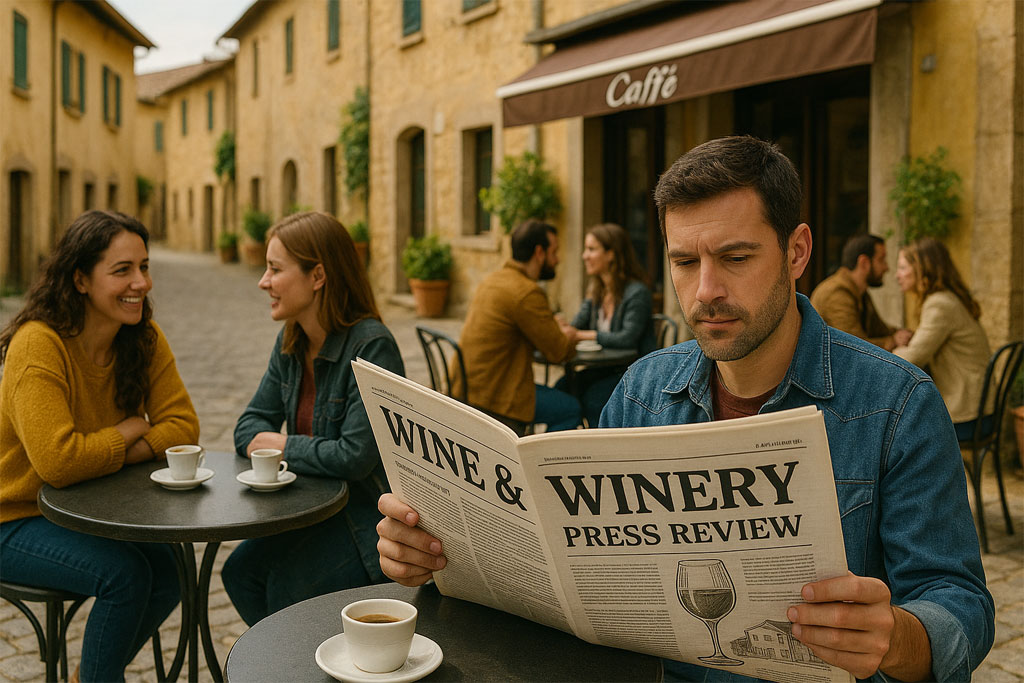
Wine press review for Sunday April 26 -2026

Italian wineries, Italian wine producers, and current wine news.

ITALIAN WINERIES

• Cantina Centanni (Marche) Six national awards at Vinitaly 2026, with the best Pecorino delle Marche. A clear signal: widespread quality and the protection of local DOCs remain competitive levers even in complex markets.

• Terre di Maria – Torreclava (Puglia) Integrated family project (wine, oil, pasta) with a strong local identity. A concrete example of an advanced short supply chain and promotion of Primitivo.

• Cantina Mevante (Umbria) Hybrid strategy between wine and culture: presence at key events and art festivals. Increasingly experiential positioning.

• Cantina La-Vis (Trentino) Relaunch of the “Ritratti” line: zoning, selection, and artistic contamination. Premiumization through visual storytelling.

• Cantina Futurista (Treviso) An “urban winery” is born: open-view winemaking and catering. A new urban business model with high experiential value.

• Cantina Martinelli (Lombardy) Advanced wine tourism: picnics among the vineyards and an immersive experience. Wine becomes a service as well as a product.

• Francesca Fiasco Winery (Cilento) Generational continuity and valorization of historic vineyards. Young producers increasingly central to the territorial revitalization.

• Pusole (Sardinia) Return of rosé after 10 years: strategic project towards sparkling wine production from Cannonau. Long-term vision.

ITALIAN WINE AND OENOLOGY

• Attilio Scienza: Italy-France gap : same production volume but halved value: the problem is storytelling. Training wine communicators is urgent.

• Vinitaly Trends: New Consumption Trends. Alcohol-free wines, aperitif wines, and beverage influences are emerging. A sign of adaptation to new consumption styles.

• Orange wine on the rise: From niche to structural phenomenon. Ancient roots (Georgia), modern relaunch with Gravner.

• Nebbiolo di Valtellina Growing international interest in elegant, less structured wines. Opportunities for “secondary” territories.

• Deconsumption and new behaviors (Cantine Riunite) Consumers between savings and quality. The market no longer follows a single direction.

• Agricultural land taxation Possible tax-free transfers in specific cases: strategic leverage for asset transactions and generational transitions.

INTERNATIONAL

• Italy vs France France dominates in value (€7/litre vs €3 in Italy) thanks to positioning and communication, not quality.

• Global wine market 2026 Clear transition: less volume, more value, more segmentation (premium, no-alcohol, mixology).

WINE EVENTS

• VinNatur 2026 (Gambellara) 180 exhibitors, declining visitor numbers but stable operators. Natural wine is now consolidated, no longer an alternative.

• Vinum 2026 (Alba) 48th edition: sustainability and local territory at the center. An increasingly strategic event for Piedmont.

• Rose Rosé (Rome) A lifestyle format that integrates wine, fashion, and art. Rosé confirms its position as a cross-category.

• Refrontolo Wine Show 55th edition: strong local roots and identity value.

• Alto Adige 9-city tour , “taste challenge” format: experiential storytelling for operators and the media.

• Vino al Vino in Cantina (Panzano) 15 wineries involved: an increasingly effective direct producer-consumer model.

• Giro del Nizza DOCG International growth and strong participation. An example of a denomination that builds collective value.

STRATEGIC SUMMARY FOR OPERATORS

The picture is clear and must be read without ambiguity:

  • Wine doesn’t decline: it changes. Less quantity, more segmentation, more experiences.
  • Value is created outside the vineyard. Communication, positioning and format are as crucial as quality.
  • The winery model evolves From producer → to platform (experience, tourism, culture, catering).
  • Vineyard assets are always strategic , but only if they are located in strong territories and have a coherent narrative.
  • Who leads the market today is not who produces best, but who interprets change first .

Thanks for listening. Today’s wine press review was brought to you by WINEIDEA.IT . See you tomorrow.

Italian vineyards: why they remain among the most solid assets (even in a changing market)

In a context of declining volumes and a shift in consumption patterns, vineyards—particularly those located in the most suitable areas—continue to represent one of the most solid and strategic alternative assets for those looking to the medium to long term.

People drink less wine, they drink better, they even drink alcohol-free. But above all, they invest differently.

A real asset in an evolving market

The evidence emerging from Knight Frank’s Wealth Report 2026 and the activity of the Wine Idea network (through platforms such as riteneagricole24.it and ruralestate24.com) confirm a trend that is now clear to operators: the vineyard is no longer just an agricultural asset, but a structured asset that is increasingly sought after by HNWIs and family offices.

Demand remains strong, especially for high-quality vineyards in recognized territories, where value is supported by tangible factors: provenance, reputation, production know-how, and market positioning.

From terroir to investment model

Until a few years ago, parameters such as altitude, exposure, and water availability were considered primarily agronomic factors. Today, however, they have become fully integrated into financial evaluation models.

Climate change has transformed these factors into decisive variables. “Climate suitability” and long-term resilience become key criteria in asset selection, directing investments toward territories capable of ensuring production continuity and quality over time.

Alongside the historic areas – which continue to maintain structural solidity – new zones with greater adaptability are emerging, destined to play an increasingly important role in investment strategies.

Not just a vineyard: an integrated business project

Today, acquiring a vineyard means entering a complex system.
Production, brand positioning, and wine tourism are no longer separate elements, but integrated parts of a single project.

Wineries are evolving into true value platforms: places of production but also experiential destinations. Hospitality, direct sales, and consumer relations are becoming strategic levers for increasing margins and differentiation.

In this context, experience is no longer an afterthought: it is an integral part of the business model.

Italy: a competitive advantage that is difficult to replicate

The Italian system continues to exert a strong international appeal.
Appellations, a consolidated reputation, and a profound connection between wine, culture, and territory make Italian vineyards iconic assets, capable of combining economic and symbolic value.

Areas such as Barolo, Collio, Conegliano Valdobbiadene, and Valpolicella remain absolute benchmarks, where the limited supply and global recognition sustain their value over time.

The operations confirm the trend

Market dynamics in recent years have been moving in the same direction.
Structured groups are strengthening their presence in highly vocational areas:

  • Marchesi Frescobaldi has consolidated its position on Etna, one of the most dynamic areas of the Italian wine scene.
  • Tommasi Family Estates developed the Ammura project in Sicily and expanded its presence in Southern Italy with strategic acquisitions.

These operations are not speculative, but rather aimed at building value over time, through territories with strong identities and growth potential.

Consumption: less quantity, more selection

At the same time, the change in consumption is evident.
Consumers – especially the new generations – do not reject wine, but reinterpret it:

  • greater attention to quality and drinkability
  • lower tolerance for excesses
  • growing sensitivity towards sustainability and transparency
  • opening towards low-alcohol and dealcohol-free products

This scenario is pushing the sector towards greater selectivity and production models more consistent with new market expectations.

Sustainability is no longer an option

In this new context, sustainability has changed its role.
It is no longer a distinctive element, but a necessary condition for existing on the market.

Water management, responsible agricultural practices, and attention to environmental impact are now integral to evaluating a winery’s assets, both from a production and financial perspective.

Conclusion: the vineyard as a value platform

The picture that emerges is clear:
Vineyards in Italy’s top wine-growing areas remain a solid investment, but with profoundly different rationales than in the past.

No longer a simple landed property, but an integrated platform where agriculture, brand, tourism and experience coexist.
No longer a passive investment, but an active entrepreneurial project, which requires vision, skills, and positioning ability.

For those who can interpret this evolution, the vineyard continues to represent one of the most interesting opportunities in the real asset landscape.

Wine press review for Saturday April 25 – 2026

Italian wineries, Italian wine producers, and current wine news.

Italian Wineries

  • Cantine Vitevis presents the restyling of the Torre dei Vescovi and Romeo & Juliet lines: focus on modern design and strengthening in the Horeca channel and export (Canada).
  • Bellavista acquires the “Città del Vino” area in Adro (Franciacorta): a €1.45 million transaction, closing a complex situation and restoring focus to sustainable practices.
  • Zonin 1821 sells Barboursville Vineyards (USA): a sign of strategic reorganization and crisis management.
  • Marchesi Frescobaldi strengthens its presence on Mount Etna: the territory confirms its position as a strategic asset with high value (up to €90,000/ha).
  • Santa Margherita Wine Group acquires a majority stake in Cantina Mesa (Sardinia), a consolidation and international development operation.
  • Casal Thaulero focuses on young people with the Miravigna line: accessible quality and innovative packaging.
  • Cantine del Notaio promotes Aglianico del Vulture as a versatile and contemporary grape variety.
  • Goddess of the Lake : an identity project combining sustainability and resilient vines.
  • La Faretra / Querce Bettina : strategic development in Montalcino with investments in sustainability and expansion.
  • Andriano launches Peter 1893 , enhancing the Lagrein Riserva and the historical memory of the cooperative.

Italian Wine & Italian Oenology

  • Exports at risk : up to €80 million blocked due to crisis in the Strait of Hormuz, impacting Gulf markets.
  • US tariffs : refunds initiated after Supreme Court ruling; opportunities for importers and distributors.
  • ISMEA “Generazione Terra” call for proposals : €120 million for under-41s to purchase agricultural land.
  • Wine tourism in Sicily : value of €3.1 billion, with a strong international presence (target 40–55 year olds).
  • Amarone : historical studies confirm its design and non-random origin, strengthening its identity positioning.
  • Wine and logistics : beware of “travel stress” in shipping, a growing issue with e-commerce.
  • Responsible Consumption Campaign (Esselunga & Diageo): The debate on wine vs. other alcoholic beverages has reopened.
  • Ancient viticulture in Pompeii : new historical readings strengthen the cultural value of Italian wine.

International

  • Geopolitical scenario : tensions in the Middle East directly impact Italian wine exports.
  • US market : tariff refund opens up opportunities for economic recovery and trade revival.
  • Global strategies : repositioning towards resilient markets and geographical diversification is increasingly important.

Wine Events

  • Rome takes centre stage with:
    • Amarone in the Capital
    • Alta Langa Rome
  • Milan Design Week : Lugana DOC wine partner of the “AnotherView” project.
  • Alto Adige Consortium Tour : “9 cities, 9 taste challenges”.
  • Irresistible Piwi (Lazise): focus on resistant vines.
  • Ceretto inaugurates Le Brunate in the Langhe: wine, cuisine, and landscape.
  • NAF – Nose Art Festival (Umbria): previews of wine and sensoriality.
  • The Winemaker’s Saturday (FIVI) : tastings spread throughout Italy.
  • Dinners in the Vineyard (Euganean Hills): 10 years of experiential wine tourism.
  • Sersale in Cantina (Calabria): 11th edition of tastings and local products.
  • Piemonte Pairing Experience : tasting calendar April–September 2026.
  • Sicilia en Primeur 2026 : from May 11th to 15th, focus on wine and territory.
  • Sommelier : Rita Gurrieri named best sommelier in Sicily 2026.

Final Strategic Summary

The picture that emerges is very clear:

  • The sector remains dynamic , but under geopolitical and commercial pressure
  • Extraordinary transactions are increasing (acquisitions, divestments, repositionings)
  • Wine tourism is increasingly central as a lever of value and sales
  • The product alone is not enough : identity, experience, storytelling count.
  • Premium territories (Etna, Sardinia, Langhe) continue to attract investments
  • Export requires new strategies : market diversification and greater control of channels

Italian wine is not in crisis: it is entering a more selective and strategic phase, where those who know how to position themselves, communicate and structure themselves best win.

Review offered by WineIdea.it See you tomorrow.

Wine press review for Friday April 24 – 2026

Italian wineries, Italian wine producers, and current wine news.

Italian wineries

Trentino Wine Consortium: Vinitaly 2026 closes with enthusiastic buyers. The Trentino wine industry closed Vinitaly with a positive outcome: a strong institutional presence, a cohesive regional network, and new international relationships. Pavilion 3 showcased wine, grappa, Trento DOC, research, taste itineraries, and B2B meetings.

Pala Wineries: New Leadership with Lia Tolaini In Serdiana, the historic Pala Winery enters a new phase under the leadership of Italian-Canadian entrepreneur Lia Tolaini, with a vision that combines Sardinian identity, internationalization, and production responsibility.

Tenuta Biodinamica Mara: a biodynamic model in Romagna The Valconca estate is one of the most consistent examples of Italian biodynamic viticulture, with an integrated agricultural ecosystem and a strong focus on biodiversity.

Vinchio Vaglio Serra: a cooperative symbol of Monferrato. Founded in 1959, the Asti cooperative remains an example of unity between small winemakers, territorial valorization, and recognized quality.

Siddùra wins awards from Wine Spectator, Decanter, and Bigot. The Gallura winery consolidates its international positioning with its Vermentino Maìa, featured at Wine2Digital and recognized for its quality and territorial identity.

Cantina Sociale Orsogna: Revenues growing strongly. The Abruzzo-based cooperative expects revenue to reach approximately €62 million by 2025, a 32% increase, thanks to organic, biodynamic, export, and private label production.

Italian wine and Italian oenology

The Italian wine giants are slowing in 2025. According to financial statement previews, 16 out of 27 companies with revenues above €100 million have reported declining revenues. Exports, domestic consumption, and the international economy are weighing heavily.

Agrivoltaics in the vineyard: the Italian model is growing. From Puglia to Caviro, experiences integrating viticulture and renewable energy are growing. Photovoltaic pergolas can reduce water stress, protect plants, and create favorable microclimates.

The first Italian agrivoltaic wines from Puglia— Falanghina, Traminer Aromatico, and Primitivo—produced using agrivoltaics attracted interest at Vinitaly for their freshness, aromatic precision, and new sustainable approach.

Wineries and art: over 60 Italian companies invest permanently. From permanent collections to signature architecture, the connection between wine, contemporary art, and the region is growing, with examples like Antinori, Ca’ del Bosco, Frescobaldi, Planeta, Donnafugata, and many others.

Dealcoholized wines: production is allowed in Italy, but bureaucracy is a drag. Frizero, in Valpolicella, opened the first Italian plant authorized for dealcoholization in March, ushering in a new era for the no-low segment.

The silent crisis of the barrel industry The wineries’ cash flow difficulties are reflected throughout the supply chain: cooperages, leasing, used barrels, and supplies are feeling the effects of the market slowdown.

Wine and health: a debate still open. The debate continues between strict positions on alcohol and studies that support moderate wine consumption during meals. The topic remains central to the sector’s communication, culture, and reputation.

Falanghina del Sannio: Growing Identity Value Falanghina remains the iconic grape of Sannio, while the Consortium is working on revising its denominations, with a possible application for DOCG status.

Bonarda dell’Oltrepò Pavese Il Baldo 2023 Finigeto A still, intense and fruity Bonarda, with Croatina leading the tannic structure and Barbera providing freshness.

International

Champagne hit by frost: losses up to 85%. 2026 is shaping up to be the worst year for frost damage in Champagne since 2003. The abnormally warm weather has accelerated the growing season, making the vineyards more vulnerable.

French winemaking in crisis: 83 companies bankrupt in 2026. Amid declining consumption, struggling exports, bankruptcies, uprootings, and crisis distillation, the French government is stepping in to support a struggling sector.

War and wine: UIV reports orders blocked for €80 million. Instability in the Middle East is halting orders in approximately twenty markets, especially in the Gulf region. UIV calls for urgent responses from the Italian government and the European Union.

Vineyards as solid alternative assets According to Knight Frank’s Wealth Report 2026, vineyards remain attractive to HNWIs and family offices, especially in suitable, resilient and climatically suitable areas.

Wine events

Euganean Wines at Villa dei Vescovi From May 8 to 10, 2026, Villa dei Vescovi will host the event dedicated to the wines of the Euganean Hills, promoted by FAI and the Colli Euganei Wine Route.

Carignano Trails in Sulcis-Iglesiente The project combines hiking, mining history, and historic vineyards, promoting the Carignano del Sulcis area through slow tourism, culture, and landscape.

Agriculture and tourism: meeting at the Grosseto University Center. The strategic role of quality agriculture and sustainable tourism for the future of the Maremma region will be discussed in Grosseto.

Wine tourism is growing rapidly . An estimated 18 million Italians will be involved in wine-related experiences by 2026. Winery visits, tastings with food pairings, and a focus on quality hospitality are on the rise.

Bee Day in Negrar di Valpolicella On May 17, 2026, Parco Nord will host an event dedicated to bees, biodiversity, local products, environmental education, and conscious consumption.

Oltrepò Pavese: appeal for a round table discussion Gian Marco Centinaio invites us to listen to the producers and to work on wine tourism, wine routes and territorial relaunch.

Winemaker’s Saturday in Ancona On May 16th, 80-90 exhibitors, mostly from the Marche region, are expected at the Mole Vanvitelliana for a FIVI day dedicated to wine, local produce, and craftsmanship.

Campania in a Glass at the Wine Bank in Pollenzo, an evening showcased Falanghina and Piedirosso between Sannio and Campi Flegrei, showcasing the grape varieties, territories, and identity of Campania.

The Wine Routes in Calabria On April 26, 2026, Condojanni will host tastings, conferences, music, and culture to promote Calabrian wine and local tourism.

Closure

The day confirms a winemaking sector undergoing rapid transformation: dynamic wineries, international crises, new production models, growing wine tourism, and a growing focus on sustainability, art, health, and the heritage value of vineyards.

Thanks for listening. Today’s wine press review was brought to you by WINEIDEA.IT . See you tomorrow.