

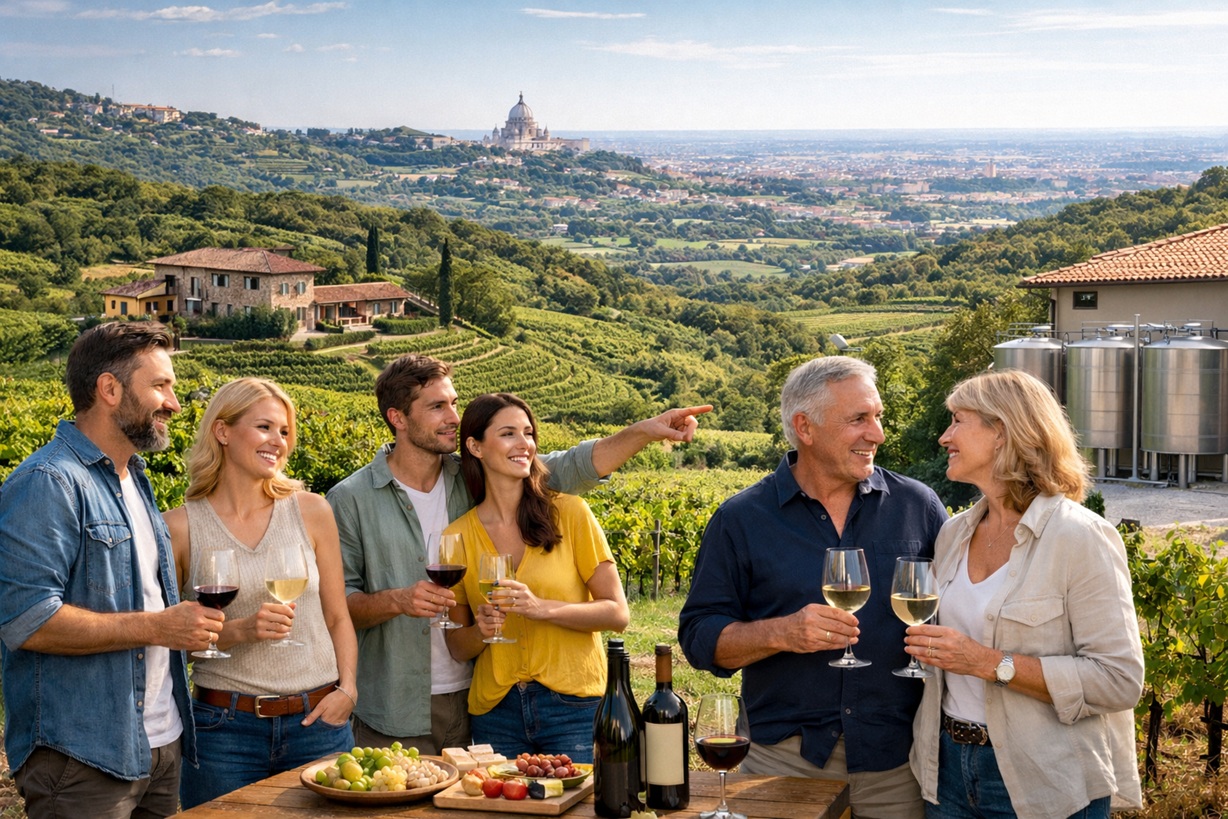
In the vicinity of Rome, strong brands and structural tourism create a rare combination of stability and potential.
The territory: because here the context really makes the difference.
Montecompatri, on the slopes of the Alban Hills, 200 meters above sea level: we are in the operational heart of the Frascati system , not in an agricultural periphery.
Three elements make this territory strategic:
1. Strong and recognizable names
Frascati DOC, Frascati Superiore DOCG, DOC Roma.
These are names that appeal to the international market, with a clear, historical, and marketable identity.
2. Volcanic soils: a real natural capital
Volcanic soils mean:
- natural freshness in whites
- structure
- longevity
- sensory recognition
Here terroir is not marketing, it is soil chemistry.
3. Proximity to Rome: a value multiplier
Rome is:
- direct market with very high absorption
- permanent tourist basin
- media platform
- premium Horeca polo
Very few estates have this combination: historical designation natural capital geographical capital .
The substance of the asset: structure, not promise
Clear numbers, without futuristic hypotheses:
- 11.36 hectares in total
- 9.56 hectares of DOC and DOCG vineyards
- 200 olive trees in production
- Certified organic since 1996: long-standing credibility, not a recent fad
Complete, self-contained, industrially readable cellar:
- Capacity 1,710 hl
- Historic concrete modern steel
- Complete winemaking, storage and bottling line
- Historic cellar under the manor house: narrative production value
Production already diversified:
- Typical still white wines (Malvasia di Candia and native varieties)
- Traditional reds
- Charmat white and rosé sparkling wines
There is no need to “build” a cellar here.
Here you have to manage an already functioning platform .
Real estate and hospitality value: a real strategic lever
This is one of the most interesting elements of the asset.
Structures already operational:
- Tasting room seating 40 with kitchen and panoramic terrace
- 3 independent housing units
- Master apartment on two levels
- Historic farmhouse to renovate
- Working Roman spring: a unique storytelling element
This means one specific thing:
There’s no need to invent hospitality, it’s already there.
The transition from a farm to a winery hospitality experience is immediate, not theoretical.
Who is it suitable for (clear buyer profile)
This estate is ideal for:
1. Entrepreneurial families or HNWIs
Looking for:
- a real agricultural asset
- near Rome
- with production, branding, real estate and hospitality
- and a solid capital component
2. Medium-small winemaking groups
What they want:
- a garrison in Central Italy
- a historical denomination
- a brand that can be easily positioned in the Horeca and tourism sectors
3. Wine & hospitality operators
Looking for:
- a ready-made platform
- tasting, apartments, farmhouse
- food and wine tourism can already be activated
4. Industrial investors in food and wine
For:
- asset diversification
- low-risk premium platform
- integration with existing distribution or catering
It is not suitable for those looking for
- Industrial volumes from large-scale retail trade
- Rapid speculative operations
- Passive assets without agricultural management
- Projects without direct presence on the territory
What we need here is entrepreneurial governance , not hit-and-run finance.
Why is it on the market now?
This is a very important step.
It does not arise from a crisis.
It arises from the end of a successful entrepreneurial cycle .
The owners have:
- built
- certified organic for 25 years
- consolidated structures and cellar
- activated hospitality
- preserved natural capital
Today the maximum value is expressed by a subject who knows:
- strengthen commercial positioning
- develop hospitality in a structured way
- give the brand a higher scale